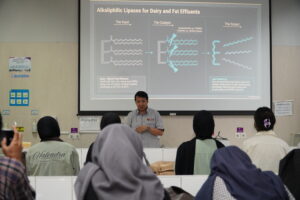
Batam City holds vast potential in fisheries processing, supported by its abundant marine resources and strategic location as a free trade zone. The fisheries sector in Bengkong District, Batam, plays a significant role in the local economy due to its coastal geography and direct access to marine areas. Bengkong District hosts several coastal and marine zones that serve as hubs for both capture fisheries and aquaculture activities. In an effort to enhance the economic value of local communities, the Faculty of Fisheries and Marine Sciences, Universitas Airlangga (FPK UNAIR), collaborated with the Batam City Fisheries Office to organize a Community Service Program focusing on fish processing techniques and fish waste utilization. This initiative was supported by the Fishery Processing and Marketing Group (POKLAHSAR) of Batam City.
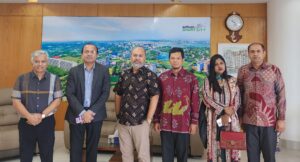
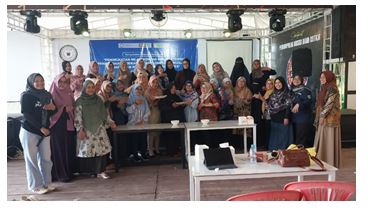
The activity took place in Bengkong District and was attended by the Head of the Batam City Fisheries Office, Mr. Yudi Admajianto, and the Chairwoman of Dharma Wanita Persatuan of the Fisheries Office, Mrs. Desi. The event was filled with enthusiasm, as community participants eagerly practiced various fish processing methods and learned about the value-added potential of fish by-products. One of the main hands-on sessions focused on improving the formulation of fish nuggets and “kaki naga” (fish stick products). Although participants were already familiar with producing these foods, the session introduced refinements to improve texture, taste, and consumer appeal. Additionally, participants gained new insights into the utilization of shrimp waste, especially shrimp shells and heads, which contain compounds that contribute to a rich umami flavor. Known as the “fifth taste,” umami provides a deep and savory sensation similar to meat broth. When heated, these compounds release enticing aromas and enhance the authentic marine flavor of processed products.
Throughout the workshop, members of POKLAHSAR — representing several small and medium enterprises (SMEs) in the fisheries sector — actively asked questions about waste utilization, recipe improvement, and packaging techniques to extend product shelf life. The session fostered an interactive learning environment where participants shared challenges and ideas related to fish processing and marketing. Training programs like this play a crucial role in strengthening the competitiveness and sustainability of fisheries-based SMEs. In a rapidly evolving market and industrial landscape, equipping entrepreneurs with relevant knowledge and practical skills is essential for long-term growth.
Overall, this community empowerment initiative served as a valuable long-term investment for fisheries SMEs in Batam. Through technology transfer, skill development, and collaborative learning, participants were empowered to innovate and scale up their businesses sustainably. The activity also reflects Universitas Airlangga’s continuous commitment to community service and knowledge dissemination, promoting the integration of science, education, and local economic empowerment for Indonesia’s blue economy development.