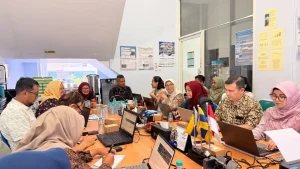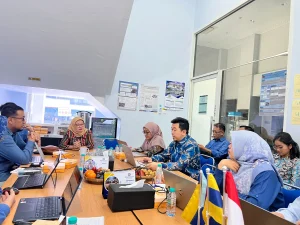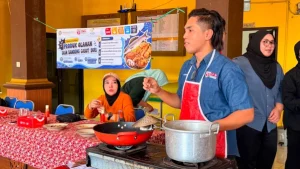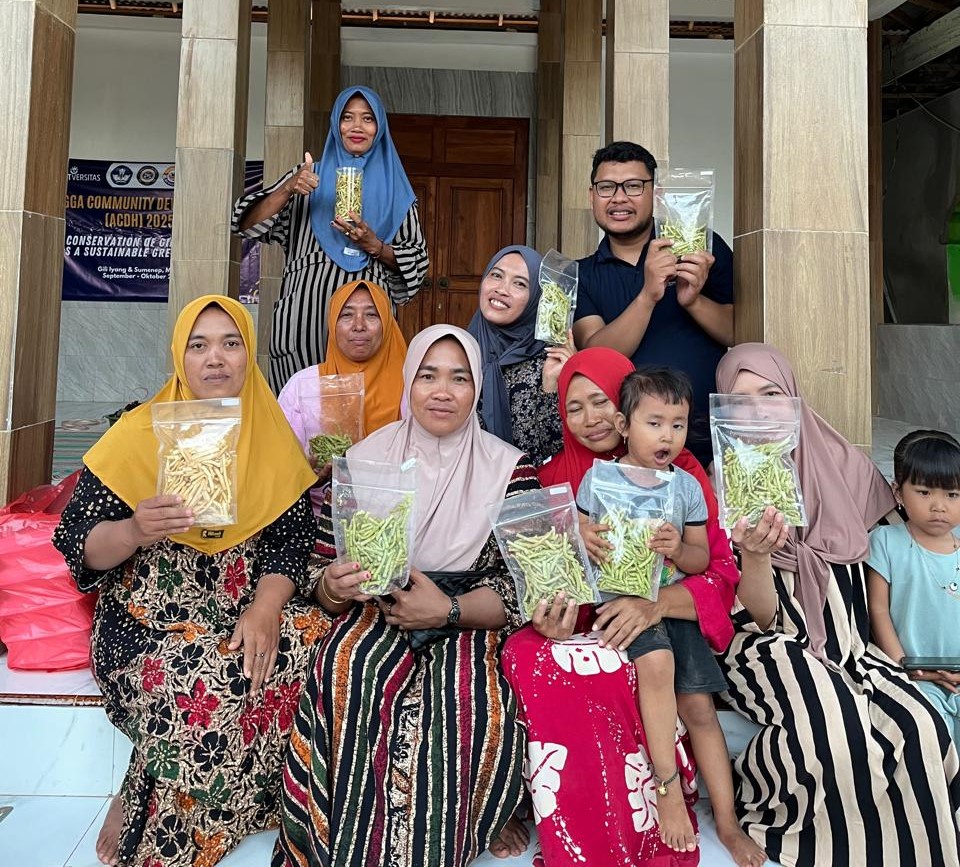
Sumenep, September 20, 2025 — The “oxygen village” of Gili Iyang is becoming increasingly vibrant through educational activities initiated by the Faculty of Fisheries and Marine Sciences, Universitas Airlangga (FPK UNAIR). This time, Dr. M. Nur Ghoyatul Amin led a community engagement session that combined a lecture and hands-on training on seaweed product diversification for local residents.
The program, conducted under the Airlangga Community Development Hub initiative, gathered 20 participants from the surrounding community. In his session, Dr. Ghoyatul introduced various types of seaweeds commonly found in nearby waters, including Sargassum sp., Padina sp., and Caulerpa sp.. Beyond discussing their nutritional and health benefits, he also emphasized the economic opportunities that could emerge from creative seaweed processing. Together with two students from the Fisheries Product Technology program—Ahmad Jundy Diyaulhaq and Muhammad Ishommuddin—the participants practiced making snack products derived from seaweed, one of which was a savory “sea grape” stick made from Caulerpa sp..
According to Dr. Ghoyatul, the natural umami flavor of Caulerpa makes it an ideal base for light snacks, comparable to healthy cheese sticks but sourced from marine ingredients. Through this training, residents were not only introduced to the science behind seaweed utilization but also guided to develop practical entrepreneurial skills that could transform local resources into marketable products. Such innovations are expected to support both the tourism appeal and the economic sustainability of Gili Iyang village.
This initiative reflects FPK UNAIR’s consistent effort to bridge marine science with community empowerment. By bringing academic expertise directly to the field, the faculty encourages local communities to recognize and utilize marine biodiversity as a key driver of regional development. The collaboration between lecturers and students also highlights UNAIR’s commitment to experiential learning—where education, research, and community service converge to create tangible social impact.
Beyond the training itself, the event fostered a spirit of innovation and self-reliance among participants. The villagers of Gili Iyang, who have long relied on marine resources, now see new potential in diversifying their products for the tourism sector. This aligns with UNAIR’s broader mission of developing sustainable blue economy models that not only protect marine ecosystems but also enhance community welfare. The success of this program demonstrates how simple, science-based initiatives can empower local economies while promoting Indonesia’s vast marine potential.