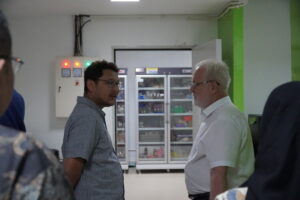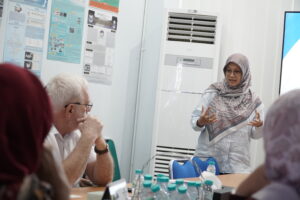
Sidoarjo – The Coastal Field School (Sekolah Pesisir Lapang/SPL) has become one of the Faculty of Fisheries and Marine Sciences (FPK), Universitas Airlangga’s flagship community engagement initiatives, demonstrating its commitment to empowering coastal communities through science-based outreach. Under the theme “Assisting Water Quality Monitoring in Mangrove-Integrated Shrimp Ponds,” the program was implemented in Segoro Tambak Village, Sedati District, Sidoarjo Regency, with the aim of strengthening local shrimp farmers’ capacity to develop more productive and sustainable traditional black tiger shrimp (Penaeus monodon) farming practices.
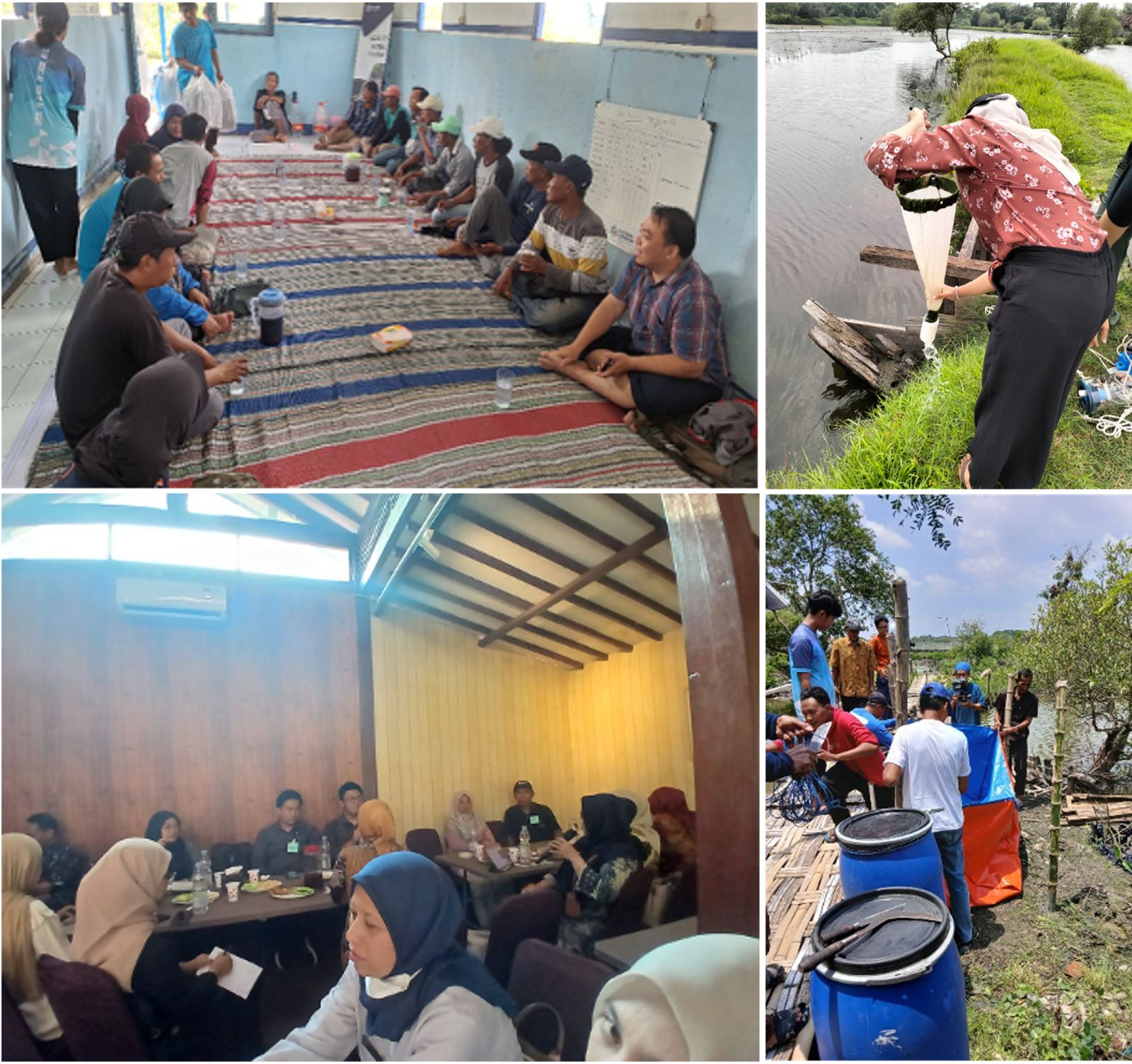
The program runs from January to November 2026, with its first implementation cycle taking place between January and June 2026. During this period, participants attended 14 learning sessions combining classroom instruction, field practice, environmental monitoring, and Focus Group Discussions (FGDs). The initiative was carried out in collaboration with the Segoro Tambak Fish Farmers Group (POKDAKAN) as the primary community partner in promoting mangrove-based shrimp farming practices.
Throughout the program, the FPK UNAIR community service team provided practical guidance on the vital role of mangrove ecosystems in maintaining the ecological balance of shrimp ponds. Training sessions covered pond infrastructure improvement, water and soil quality management, and the utilization of organic waste to produce organic fertilizer capable of enhancing aquaculture productivity.
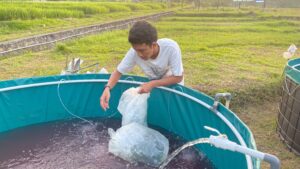
Beyond classroom learning, participants engaged in hands-on field activities, including water quality analysis, soil testing, pond infrastructure assessments, and regular monitoring of mangrove communities. This experiential learning approach enabled farmers to directly evaluate environmental conditions while applying the knowledge gained during the training sessions to their own aquaculture operations.
Water quality and environmental monitoring were conducted continuously over a three-month period to assess the health of the aquaculture ecosystem. The monitoring results served as the basis for developing recommendations to improve environmentally responsible pond management practices, ultimately supporting the long-term sustainability of traditional black tiger shrimp farming.
The Coastal Field School was implemented through collaboration with multiple partners, including Blue Forest Indonesia Foundation, PT ATINA, Sidoarjo Marine and Fisheries Polytechnic, the East Java Provincial Marine and Fisheries Agency, the Sidoarjo Regency Water Resources Agency, the Surabaya Public Works Agency, and UPT BAPL Bangil. This multi-stakeholder collaboration reflects a shared commitment to advancing traditional shrimp farming through scientific, educational, and participatory approaches.
Through these partnerships, participants gained not only technical knowledge of shrimp farming but also a deeper understanding of the critical ecological role that mangrove ecosystems play in supporting healthy aquaculture environments. The mentoring activities were designed to improve farmers’ capabilities in water quality management, pond rehabilitation, and the sustainable utilization of locally available natural resources.
The results of the first implementation cycle demonstrated significant improvements in participants’ understanding of mangrove ecosystem functions and their contribution to maintaining pond environmental quality. Farmers also enhanced their knowledge of converting organic waste into organic fertilizer while strengthening practical skills in pond preparation and infrastructure improvement prior to shrimp cultivation.
The Coastal Field School will continue through periodic environmental monitoring, expanded research collaborations, and future community engagement initiatives involving various institutional partners. These ongoing efforts are expected to encourage the development of traditional shrimp farming systems that are more resilient to environmental changes, highly productive, and environmentally sustainable.
Through this program, FPK UNAIR once again reaffirmed its commitment to empowering coastal communities by applying practical scientific knowledge and technological innovation. The Coastal Field School also contributes to the achievement of the Sustainable Development Goals (SDGs), particularly SDG 4 (Quality Education) by strengthening community capacity through knowledge transfer, SDG 14 (Life Below Water) by promoting environmentally responsible aquaculture practices that protect coastal and mangrove ecosystems, and SDG 17 (Partnerships for the Goals) through collaboration among universities, government institutions, industry partners, and local communities in advancing sustainable coastal resource management.
Writer: Farrel Bhanu Mahardhika
Editor: TPA