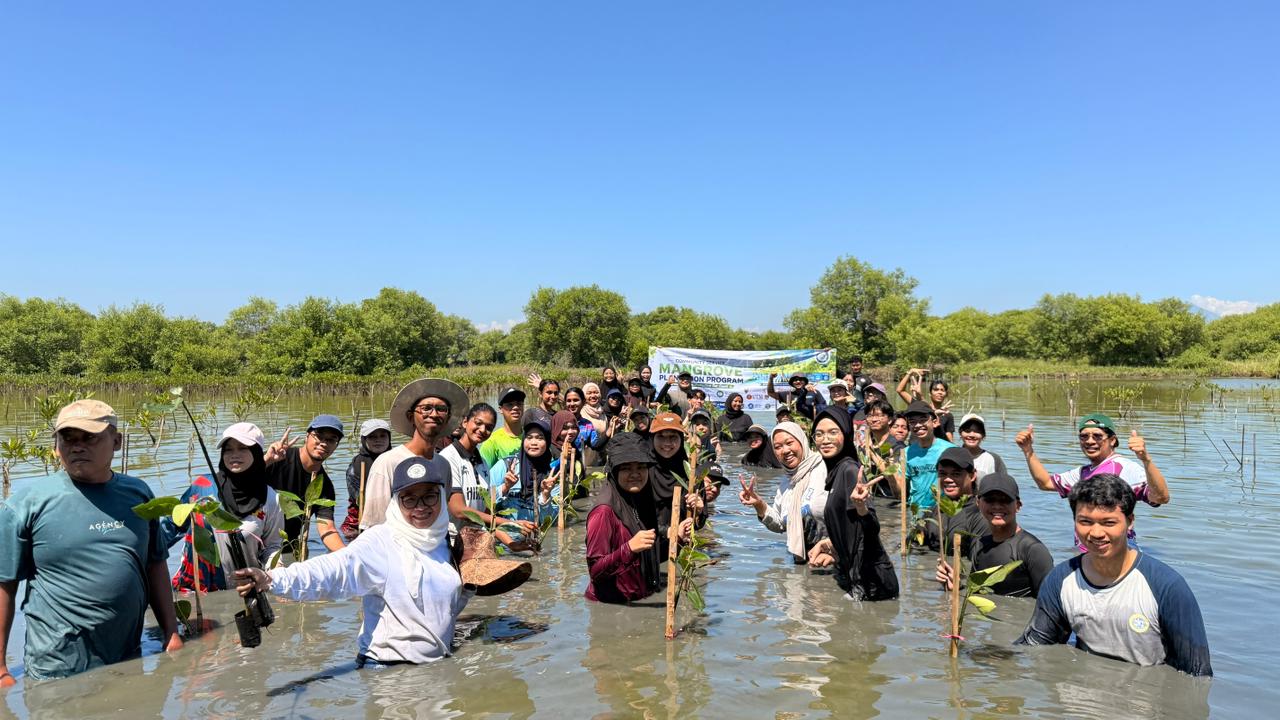
Surabaya — The Faculty of Fisheries and Marine Sciences, Universitas Airlangga (FPK UNAIR), once again demonstrated its commitment to coastal environmental conservation through an international community service activity in the form of mangrove planting at the Gunung Anyar Mangrove area, Surabaya, on Wednesday (May 7, 2026). The activity involved 30 international students from Malaysia, the Philippines, and Thailand, alongside 20 members of the FPK UNAIR academic community. The Dean of FPK UNAIR, Prof. Dr. Ir. Endang Dewi Masithah, M.P., and faculty representatives were also present as a tangible form of support for sustainable coastal ecosystem rehabilitation efforts.
A total of 100 mangrove seedlings were planted in a coastal area previously converted into aquaculture ponds. The activity aimed to reforest the land and restore the ecological functions of mangroves as essential ecosystems that maintain environmental balance between terrestrial, estuarine, and marine areas. In addition to serving as natural barriers against coastal abrasion and seawater intrusion, mangroves also function as habitats for various aquatic organisms that support the sustainability of marine resources.
This international community service activity formed part of the implementation of the university’s tridharma principles, particularly in the aspects of community engagement and educational internationalization. The participation of international students also reflected FPK UNAIR’s effort to strengthen global collaboration based on environmental and sustainability issues. The intercultural interactions established throughout the program provided broader learning experiences for all participants, especially in understanding the challenges of conserving coastal ecosystems in Indonesia.
During the implementation, participants were divided into several groups to directly plant mangrove seedlings in the rehabilitation area. Prior to the planting session, participants received explanations from the Gunung Anyar mangrove management team regarding the ecological importance of mangrove ecosystems and proper planting techniques to ensure optimal seedling growth. Participants showed high enthusiasm throughout the activity, particularly when they had the opportunity to engage directly in coastal environmental conservation practices.
The Vice Dean III of FPK UNAIR, Annur Ahadi Abdillah, S.Pi., M.Si., Ph.D., stated that the activity was intended not only to preserve the environment but also to foster collective awareness among students regarding the importance of sustainable coastal ecosystems. According to him, the involvement of international students represented an important momentum to strengthen global networks while introducing Indonesia’s conservation practices to the international community.
Beyond its ecological benefits, the activity also served as an educational platform for students to better understand the importance of sustainable coastal resource management. Through direct field experience, participants learned that conservation is not merely a theoretical concept but also requires concrete action and collaboration among various stakeholders to ensure environmental sustainability.
This initiative aligns with the Sustainable Development Goals (SDGs), particularly SDG 13 (Climate Action) through coastal rehabilitation as a natural carbon sink, SDG 14 (Life Below Water) through the preservation of coastal habitats and marine biodiversity, and SDG 17 (Partnerships for the Goals) through international collaboration among students and academic communities from different countries. Through this activity, FPK UNAIR hopes to continuously foster the spirit of environmental conservation and create a positive impact on the sustainability of coastal ecosystems in the future.
Penulis: FBM
Penyunting: TPA