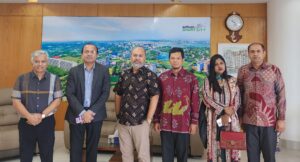
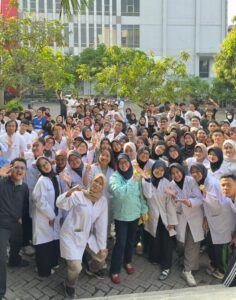
Surabaya – Nine students from the Aquaculture Study Program, Faculty of Fisheries and Marine Sciences (FPK), Universitas Airlangga (UNAIR), batch 2023, participated in a student outbound program at the Faculty of Science, Universiti Malaya (UM), Kuala Lumpur, Malaysia. The program was held from September 8–12, 2025, as part of FPK UNAIR’s international academic collaboration initiative. The participating students were Ahmad Fadhil Damarmanah Goesti Putra, Dwi Jeni Erika, Adhi Pramana Tsaqih Setya Admaja, Anisa Selviana Syafitri, Alkhaizaran Syafiyatudin, Teguh Prasetyo, Reviyanti Trezatalia, Velda Leyla Nadhif, and Rofiatur Rohma Ramadhaniah. They were accompanied by Dr. Ayu Lana Nafisyah and Mrs. Lutfianah Aprilianta Sari, who served as academic supervisors throughout the program.
For six days, the participants engaged in a comprehensive series of learning activities that focused on local biodiversity, including plant biology, entomology, ichthyology, plant pathology, aquaculture feed, and the utilization of fungi for liquid waste management. The sessions were conducted through offline classes and laboratory field visits at the Faculty of Science, Universiti Malaya. These activities aimed to broaden students’ scientific understanding beyond aquaculture, offering a more holistic perspective on biological and environmental systems.
One of the participants shared that the experience provided valuable insights into wider aspects of biodiversity. “The learning we gained was not only about aquaculture cultivation but also covered broader biodiversity topics. For example, we studied papaya diseases, specifically the Papaya Ringspot Virus (PRV), which we found particularly interesting,” said one of the students. This interdisciplinary learning approach encouraged students to connect aquaculture with plant and microbial sciences, aligning with FPK UNAIR’s commitment to developing integrative and applied learning experiences.
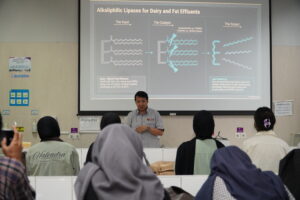
During the visit, the delegation was also introduced to the Faculty of Biology at Universiti Malaya, accompanied by Dr. Afiq and local students. They actively participated in practical sessions such as assembling a filtration system for tilapia ponds and attending a lecturer’s presentation on current research topics. In addition, the students engaged in open discussions during Q&A sessions, promoting cross-cultural academic exchange between UNAIR and UM students. The hands-on experiences provided a deeper appreciation of how laboratory-based learning supports research and innovation in fisheries and environmental sciences.
The program concluded with a visit to the Rimba Museum, which houses a vast collection of native Malaysian plants and insects. This visit allowed students to observe biodiversity conservation efforts firsthand while learning about ecosystem diversity in tropical environments. Through this outbound program, FPK UNAIR continues to strengthen its global engagement and provide its students with exposure to international learning environments. The faculty’s ongoing collaboration with Universiti Malaya underscores its mission to prepare globally competent graduates with strong academic foundations and environmental awareness.