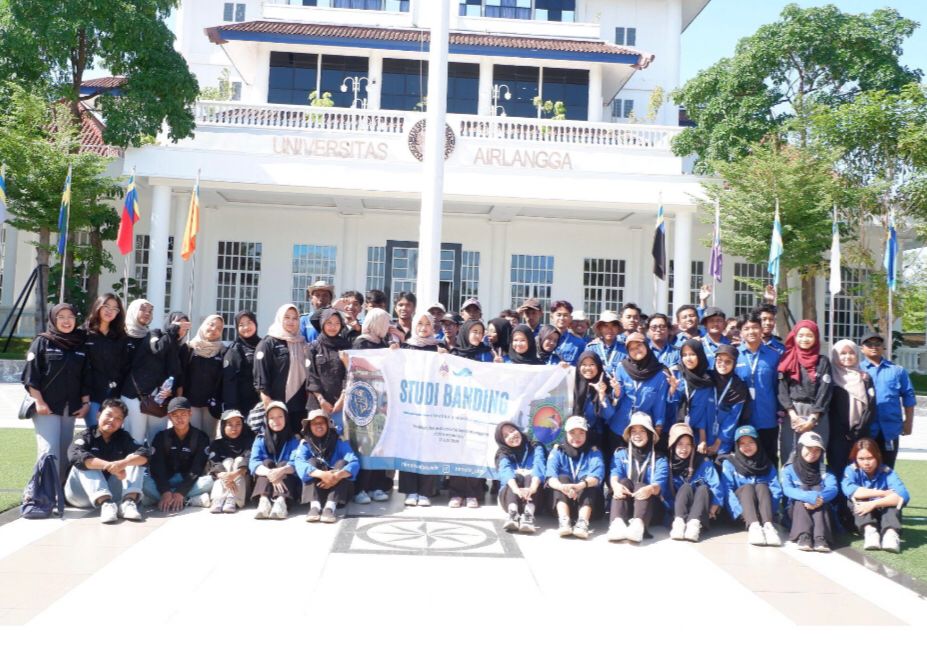
Surabaya – The Aquaculture Student Association (HIMAKUA) of the Faculty of Fisheries and Marine, Universitas Airlangga organized a Comparative Study Visit on Saturday (May 24, 2025) at the Faculty of Fisheries and Marine, Surabaya. The activity was conducted as part of the implementation of the university’s tridharma principles—education, research, and community service—while also strengthening institutional engagement among student organizations in the fisheries and marine sector. The event brought together HIMAKUA FPK Unair and HIMALA UTM in a collaborative academic atmosphere aimed at fostering mutual growth and organizational development.
The Comparative Study Visit was designed to establish closer ties between student associations, enhance inter-organizational relations, and facilitate the exchange of knowledge and experiences in managing student-led organizations within fisheries and marine sciences. By initiating this forum, both institutions sought to build sustainable collaboration in future work programs, whether academic or non-academic in nature. The activity reflects the Faculty’s broader commitment to nurturing leadership, professionalism, and innovation among students, aligning organizational capacity-building with academic excellence and community-oriented values. Through such initiatives, student associations are encouraged not only to function as extracurricular platforms but also as strategic partners supporting faculty-driven research dissemination, academic enrichment programs, and social engagement activities.
The event commenced with an opening session and welcoming remarks delivered by representatives of both student associations, emphasizing the importance of synergy and shared vision in advancing fisheries and marine education. This was followed by an introduction to each organization’s structural framework and presentations of their respective annual work programs. Participants then engaged in an interactive discussion and question-and-answer session that explored organizational development strategies, program innovation, governance challenges, and solutions implemented within each association. Key topics included leadership regeneration, program sustainability, stakeholder engagement, and the integration of academic values into student-led initiatives. The session provided an open platform for critical dialogue, allowing participants to analyze strengths, identify areas for improvement, and explore potential collaborative projects that could contribute to academic forums, environmental campaigns, and community-based aquaculture outreach programs.
The Comparative Study Visit concluded with a joint documentation session and the exchange of commemorative tokens as a symbol of partnership and collegiality between HIMAKUA FPK Unair and HIMALA UTM. Overall, the activity was conducted smoothly and was marked by high enthusiasm and active participation from all attendees. Through this initiative, HIMAKUA FPK Universitas Airlangga aims to expand its institutional network, gain fresh perspectives, and adopt innovative practices that can be implemented within the Faculty of Fisheries and Marine environment. More broadly, the program demonstrates how student organizations serve as integral components of higher education ecosystems—supporting academic development, encouraging collaborative research culture, and contributing to the advancement of sustainable fisheries and marine resource management.