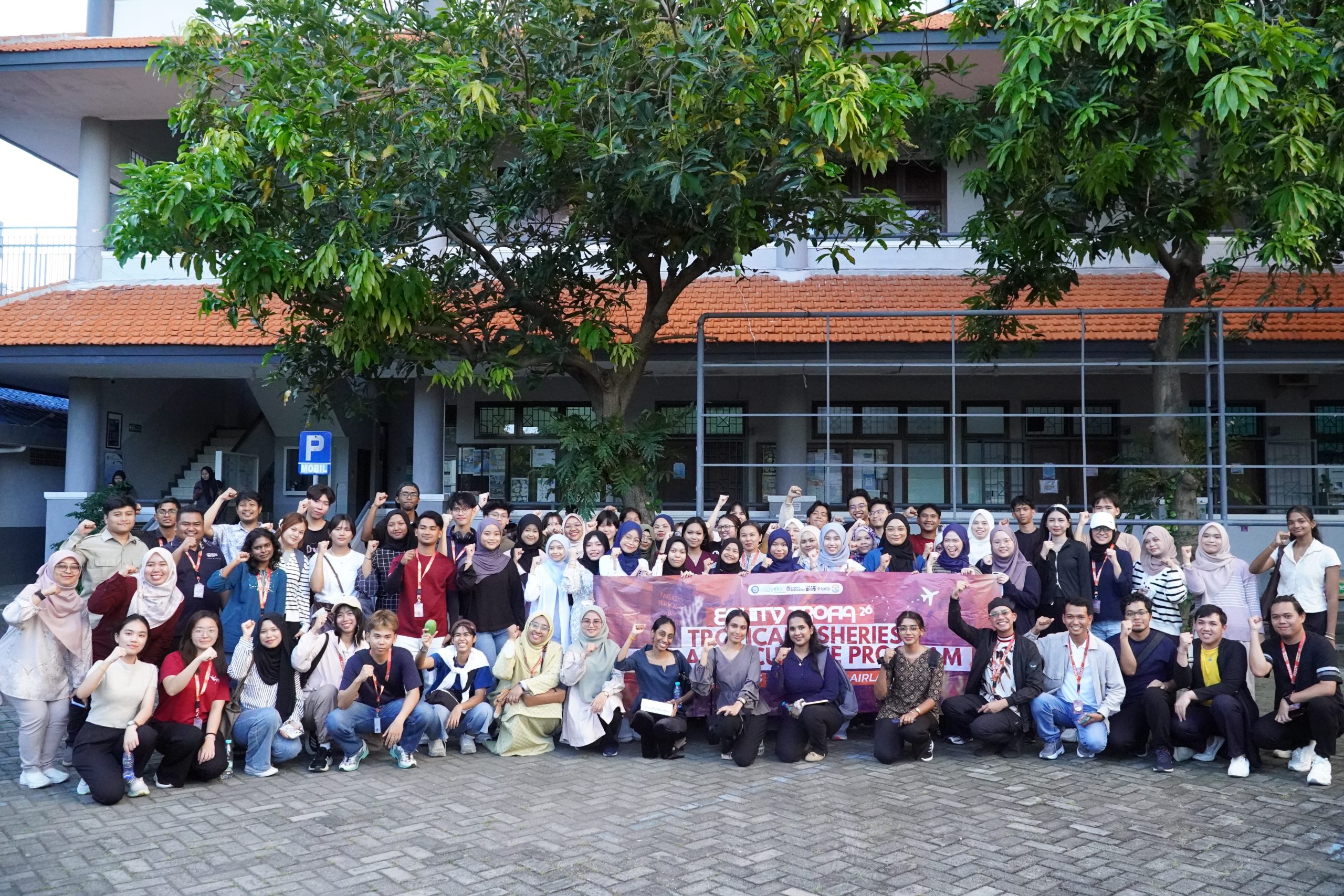
The Faculty of Fisheries and Marine Sciences, Universitas Airlangga (FPK UNAIR), continued the second day of Tropical Fisheries and Aquaculture (TROFIA) 2026 with a dynamic blend of international academic lectures and hands-on creative sessions. Held at FPK UNAIR, the program offered interdisciplinary learning experiences for international students by integrating scientific discussions, fisheries product innovation, and ecosystem-based aquascaping practice.
TROFIA 2026 is an international inbound program designed to introduce sustainable tropical fisheries and aquaculture development to global students. This year’s participants came from Malaysia, Thailand, and the Philippines, representing partner universities across Southeast Asia. Through structured academic sessions and practical activities, the program provides opportunities to explore Indonesia’s tropical aquatic resources while strengthening regional academic networks in fisheries and marine sciences.
International Lectures Discuss Thailand’s Aquaculture and Aquatic Biotechnology
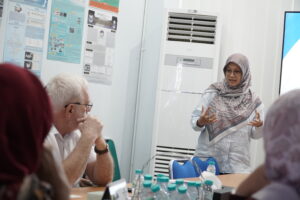
The second day commenced with academic sessions featuring international scholars from Thailand and Malaysia. The first lecture was delivered by Dr. Sukkrit Nimitkul from Kasetsart University through a session titled “Thailand’s Aquaculture Industry: Current Status and Future Directions.” He elaborated on the current development of Thailand’s aquaculture sector, key challenges faced by the cultivation industry, and future technological and sustainability-oriented strategies to strengthen the sector’s competitiveness. His presentation highlighted how innovation, responsible resource management, and adaptive policies play essential roles in ensuring long-term industry resilience in Southeast Asia.
The following session was presented by Dr. Sawika Kunlapapuk from Silpakorn University under the topic “Endemic Fishes of Suan Phueng, Ratchaburi, Thailand.” Participants were introduced to the diversity of endemic fish species in Suan Phueng and the ecological importance of conserving local aquatic biodiversity to maintain ecosystem stability. An engaging discussion emerged when participants raised ethical questions regarding the relocation of endemic species to new environments perceived as more favorable for population survival. In response, Dr. Sawika emphasized that such actions must be preceded by comprehensive ecological assessments and cannot be undertaken arbitrarily. She explained that introducing species into new habitats carries potential ecological risks, including disruption of trophic interactions, competition with native species, and imbalance in ecosystem carrying capacity. Her explanation reinforced the importance of science-based conservation and responsible aquatic resource management.
Approaching midday, participants attended a lecture by Dr. Nazrin Abd Aziz from Universiti Teknologi Malaysia titled “Biopharming: Towards Plant-Made Pharmaceutical Protein in Aquatic Plant Species.” In his presentation, he focused on aquatic plant biotechnology as a recombinant protein production system aimed at enhancing plant resilience and health rather than clinical applications for humans. He described how plant-made pharmaceutical proteins can be utilized to improve resistance against pathogens and support sustainable innovation in aquatic resource-based systems. Through this academic series, participants gained not only theoretical insights into tropical aquaculture development but also a broader understanding of the role of research, biotechnology, and international collaboration in advancing global fisheries sustainability.
Mangrove Syrup Processing Practice with Fisheries Processing Club
Following the academic lectures, participants engaged in an interactive mangrove syrup production session guided by students from the Fisheries Processing Club (FPC) of FPK UNAIR. FPC is a student organization focusing on fisheries product processing, food innovation, and creativity based on aquatic resources. This activity aimed to demonstrate how coastal resources, particularly mangrove-based materials, can be transformed into value-added products with economic potential.
During the session, FPC members introduced participants to the potential utilization of mangroves as processed products while also emphasizing sustainable harvesting principles. Participants were guided step-by-step, starting from ingredient preparation and extraction processes to cooking techniques and final packaging stages. The hands-on format enabled participants to directly experience the transformation of raw materials into a marketable product. Beyond the technical process, discussions also addressed the socio-economic relevance of community-based mangrove product development as part of coastal empowerment strategies.
The session concluded with a tasting experience, allowing participants to evaluate the product they had prepared collaboratively. This practical engagement highlighted the importance of integrating scientific knowledge with local resource utilization and entrepreneurship. It also demonstrated how academic institutions like FPK UNAIR encourage innovation aligned with sustainable coastal ecosystem management.
Aquascape Practice with KAKEMA FPK UNAIR
The next session featured an aquascape workshop guided by students from Kajian Keilmiahan Mahasiswa (KAKEMA) FPK UNAIR, a semi-autonomous academic organization dedicated to scientific development and aquaculture studies. The workshop introduced participants to the design and construction of miniature aquatic ecosystems within aquariums, emphasizing biological balance and environmental aesthetics.
Participants were guided through essential stages, including the installation of bacterial housing or base fertilizers, substrate layering, aquatic plant arrangement, gradual water filling, and the careful introduction of fish. The mentors explained the ecological principles underlying aquascaping, such as nutrient cycling, beneficial bacteria colonization, and species compatibility. Through this activity, participants developed practical awareness of how controlled aquatic environments must maintain equilibrium to ensure organism survival and water quality stability.
The aquascape practice provided experiential learning about ecosystem management at a micro scale, reinforcing theoretical knowledge gained during lectures. It illustrated how sustainability principles can be applied not only in large-scale aquaculture systems but also in controlled aquatic habitats. This integration of science, creativity, and environmental stewardship reflects FPK UNAIR’s commitment to producing globally competent graduates with ecological responsibility.
SDGs Implementation in TROFIA 2026
The implementation of TROFIA 2026 reflects the Sustainable Development Goals (SDGs), particularly SDG 14 (Life Below Water), through activities emphasizing aquatic resource conservation, ecosystem sustainability, and responsible coastal and aquaculture management. Discussions on endemic fish conservation, aquascaping practice, and mangrove-based product innovation all contributed to raising participants’ awareness of the need to protect aquatic biodiversity and maintain ecological balance.
Furthermore, TROFIA 2026 embodies SDG 17 (Partnerships for the Goals) through collaboration between FPK UNAIR and partner universities across Southeast Asia. The program serves as a platform for academic exchange, cross-cultural interaction, and research networking that strengthens international cooperation in fisheries and tropical aquaculture. By facilitating dialogue among students and lecturers from multiple countries, TROFIA fosters mutual understanding and long-term academic partnerships.
One participant, Muhammad Adam from Universiti Kebangsaan Malaysia, expressed that the program provided new experiences that expanded both his academic knowledge and understanding of Indonesian aquaculture practices and culture. He noted that interactive sessions such as mangrove syrup production and aquascaping were particularly engaging because they allowed direct collaboration with FPK UNAIR students. He also highlighted that TROFIA serves as an excellent platform for building international connections and exchanging knowledge among students from different countries.
The second day of TROFIA 2026 concluded with a reflection session before participants returned to their hotel, preparing to continue the next day’s academic and experiential learning agenda.
Writer : Alejandro Ahmad Zuhayr
Editor : TPA