The Faculty of Fisheries and Marine Sciences, Universitas Airlangga (FPK UNAIR), continues to demonstrate its commitment to advancing innovative, value-added functional food derived from fisheries resources. Through a research initiative led by students of the 2022 cohort of the Fisheries Product Technology Study Program, FPK UNAIR has developed gluten-free and egg-free cookies made from seaweed and surimi. This innovation offers a healthy, nutritious, and inclusive alternative for individuals with gluten intolerance or egg allergies, while also supporting sustainable marine resource utilization and national food diversification.
The research was supervised by the Vice Dean III of FPK UNAIR, Annur Ahadi Abdillah, S.Pi., M.Si., Ph.D., and involved five students: Fahmi Bayhaqi Abdullah, Fauziah Zanishar Diannisa, Moch Farudin, Ghais Azriel Rizieq, and Gilang Fachri Ramadhan. Conducted on May 4–5, 2026, at the Food Laboratory, Building B, Faculty of Fisheries and Marine Sciences, Universitas Airlangga, the study focused on formulating gluten-free cookies using arrowroot starch (Maranta arundinacea) as a wheat substitute, combined with seaweed porridge (Eucheuma cottonii) and surimi to enhance nutritional value, texture, and sensory characteristics. By integrating local non-gluten ingredients and fisheries-based protein sources, the research reflects FPK UNAIR’s academic vision to transform Indonesia’s marine potential into innovative food solutions.
Two Product Development Schemes
The research was divided into two distinct product development schemes with different formulation approaches. The first group, consisting of Fahmi Bayhaqi Abdullah and Fauziah Zanishar Diannisa, developed “Non-Gluten Cookies Based on Arrowroot Starch (Maranta arundinacea) with Seaweed Porridge (Eucheuma cottonii) Substitution.” Arrowroot starch was selected as a locally sourced gluten-free ingredient with easily digestible starch properties and strong potential as a wheat flour substitute. Seaweed porridge functioned as an egg replacer, improving moisture retention, crumb structure, and dietary fiber content. This formulation highlights the utilization of indigenous plant-based resources to create inclusive bakery products suitable for specialized dietary needs.
The second group, composed of Moch Farudin, Ghais Azriel Rizieq, and Gilang Fachri Ramadhan, developed “Gluten-Free Cookies with Surimi Flour and Seaweed Porridge Addition.” This approach emphasized increasing protein content by incorporating surimi as a fisheries-derived animal protein source. Beyond enhancing nutritional value, surimi influenced texture, water-binding capacity, and flavor profile. The resulting cookies are positioned not only as gluten-free snacks but also as high-protein, marine-based functional food products with promising commercial potential. This innovation demonstrates how fisheries processing can expand beyond traditional products and enter the bakery and healthy snack sector.
Hedonic Testing and Consumer Acceptance Evaluation
Sensory evaluation was conducted in a controlled laboratory setting using a 1–5 hedonic scale, assessing color, aroma, taste, texture, and overall acceptability. On May 4, 2026, the first group tested four randomly coded samples to minimize bias and determine the most preferred formulation. This step ensured that the substitution of gluten-free ingredients and seaweed maintained desirable sensory quality.
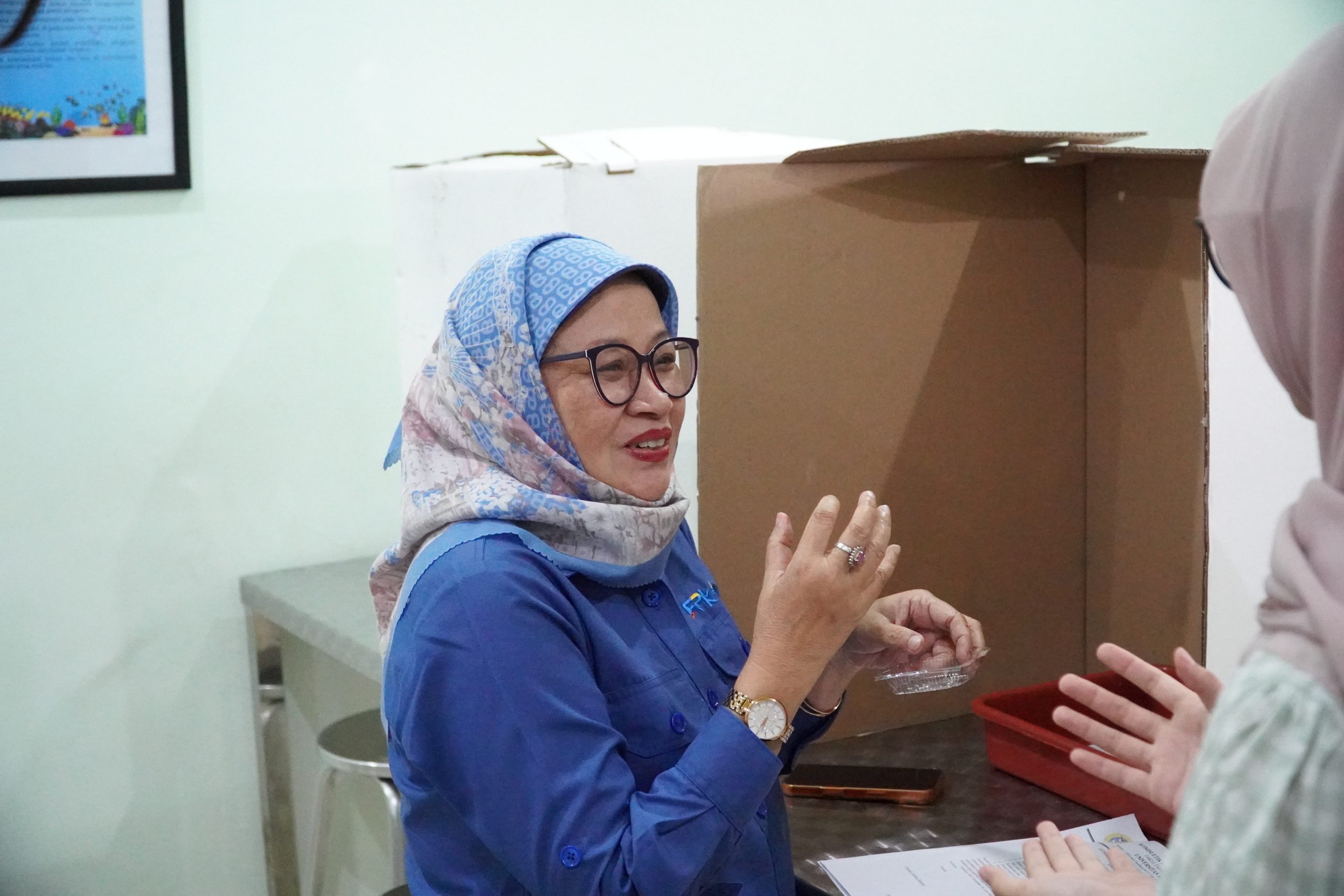
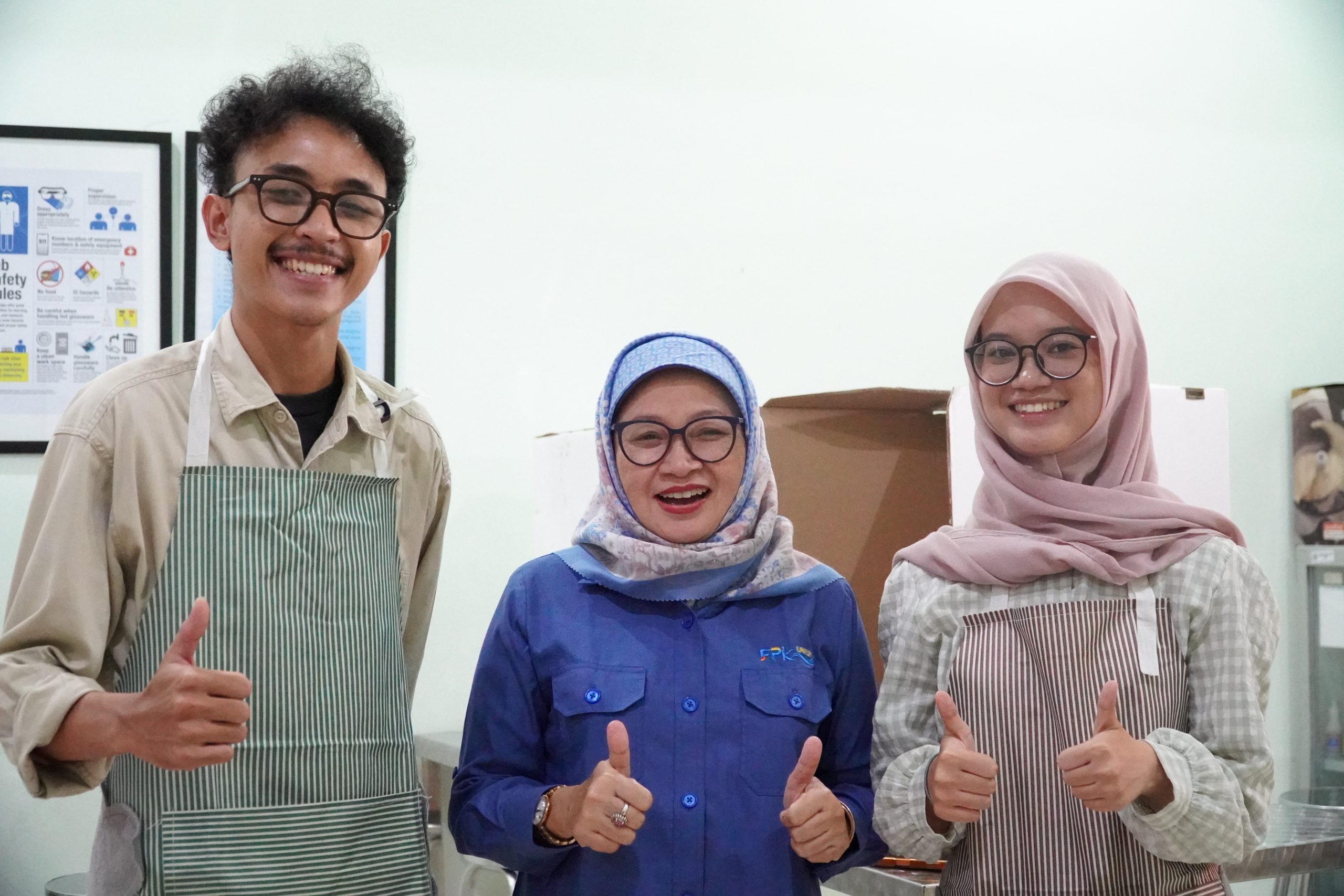
On May 5, 2026, the second group performed a similar hedonic test, complemented by preference and purchase intention analysis to assess market feasibility. The evaluation involved internal panelists, including the Dean of FPK UNAIR, Prof. Dr. Ir. Endang Dewi Masithah, M.P., whose participation underscored institutional support for student-driven research and innovation-based academic culture. The collected data will serve as a foundation for refining formulations and exploring potential scale-up toward industrial production.
Research Objectives and Benefits
The primary objective of this research is to develop value-added functional food products derived from fisheries resources that are safe for individuals with specific dietary requirements and competitive in the market. It also serves as a comprehensive experiential learning platform for students, encompassing formulation development, production techniques, sensory evaluation, and consumer preference analysis.
Academically, the study generates empirical data on the physical and sensory characteristics of seaweed- and surimi-based cookies. Practically, it opens opportunities for diversifying fisheries-processed products beyond conventional items such as fish nuggets or fish balls, expanding into the bakery and functional snack market while reinforcing the role of fisheries science in addressing contemporary nutritional challenges.
Contribution to SDG 2: Zero Hunger
This gluten-free seaweed and surimi cookie innovation aligns with Sustainable Development Goal (SDG) 2: Zero Hunger by supporting the provision of diverse, nutritious, and sustainable food sources. Marine-based food diversification contributes to strengthening national food resilience and reducing dependency on imported wheat flour.
By optimizing seaweed and surimi as primary ingredients, the research showcases the potential of Indonesia’s fisheries sector in creating inclusive, high-protein, and fiber-rich snack alternatives. Through this initiative, FPK UNAIR continues to contribute to food security, sustainable development, and innovative nutrition solutions at both national and global levels.