Surabaya – The Faculty of Fisheries and Marine (FPK) Universitas Airlangga continues to strengthen its international academic network through various collaborative programs with overseas universities. One of the recent initiatives successfully conducted was an international guest lecture featuring academics from Universiti Teknologi Malaysia (UTM). The activity reflected FPK UNAIR’s commitment to broadening students’ global perspectives while reinforcing academic cooperation in the fields of fisheries, marine science, and biotechnology. Held at the Faculty of Fisheries and Marine, Universitas Airlangga, the international lecture attracted enthusiastic participation from students and lecturers who were eager to gain insights from international experts with diverse academic and professional backgrounds.
The guest lecture featured two distinguished speakers from UTM, namely Dr. Nur Izzati Mohd Noh from the Department of Bioscience and ChM. Anthony Nyangson Steven from the Department of Chemistry. Through this activity, students were introduced to current developments in biotechnology, environmental science, and applied chemistry, which are becoming increasingly important in addressing global environmental and industrial challenges. The program also served as a platform for academic knowledge exchange between Indonesian and Malaysian institutions, highlighting the importance of international collaboration in advancing scientific innovation and sustainable development.
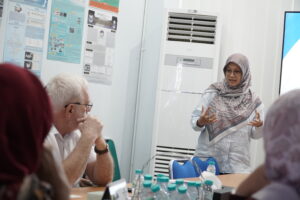
During her presentation, Dr. Nur Izzati discussed the advancement of microbiology in modern biotechnology. She explained how microorganisms possess significant potential to be developed into various bioactive products beneficial for health, environmental sustainability, and industrial applications. The lecture explored the role of microbial biotechnology in producing environmentally friendly compounds that can support sustainable industries and scientific innovation. Her presentation not only focused on theoretical concepts but also introduced practical research opportunities that students may pursue in the future, particularly in the field of marine biotechnology and bioresource exploration.
“Microorganism-based biotechnology has enormous potential to support sustainable development, including the production of environmentally friendly bioactive compounds,” explained Dr. Izzati during the lecture session. Her statement emphasized the growing importance of biotechnology in supporting global sustainability initiatives and encouraged students to explore interdisciplinary research opportunities in the future.
The academic atmosphere became even more engaging when Dr. Eng. Sapto Andriyono, the course coordinator of Marine Bioprospecting, joined the session and shared his research experiences regarding genetic isolation from fishery resources collected from tropical regions to Antarctic waters. His presentation provided students with a real perspective on the extensive opportunities available in marine biotechnology research and demonstrated how scientific exploration can contribute to understanding biodiversity and discovering potential marine-based bioactive compounds.
Students showed great enthusiasm when Dr. Sapto described the challenges of conducting molecular research in extreme environments such as Antarctica, including field sampling processes and genetic analysis methods used to identify bioactive potential in aquatic organisms. The discussion highlighted the importance of scientific innovation, perseverance, and interdisciplinary collaboration in advancing marine science research at the international level. The session also inspired students to recognize the vast potential of Indonesia’s marine biodiversity as a strategic resource for future scientific exploration and sustainable utilization.
Equally interesting, ChM. Anthony Nyangson Steven shared his professional experiences closely related to industrial applications of chemistry. Using an applied and practical approach, he connected chemical science with various environmental pollution issues that have become pressing global concerns. He explained that poorly managed industrial waste can cause serious environmental and public health impacts. However, he also introduced the application of bioenzymes as an innovative solution to reduce pollution levels from industrial waste before it is released into the environment.
The explanation regarding bioenzyme utilization received considerable attention from students because it directly addressed increasingly complex environmental challenges faced by modern society. Participants actively engaged throughout the session, particularly during the discussion and question-and-answer segments, where students enthusiastically explored the potential implementation of biotechnology and chemistry in solving environmental issues. The interactive atmosphere reflected the high level of student interest in global scientific developments and practical solutions related to sustainability and environmental management.
This international guest lecture also aligned with the implementation of the Sustainable Development Goals (SDGs). The discussion on biotechnology innovation and environmentally friendly industrial solutions supported SDG 4: Quality Education by enhancing students’ global academic exposure and practical scientific understanding. Furthermore, the utilization of bioenzymes and environmentally sustainable biotechnology innovations contributed to SDG 9: Industry, Innovation, and Infrastructure through the promotion of scientific innovation and sustainable industrial development. The activity also supported SDG 14: Life Below Water by encouraging research and exploration of marine biodiversity resources, as well as SDG 17: Partnerships for the Goals through the strengthening of international academic collaboration between Universitas Airlangga and Universiti Teknologi Malaysia.
Through activities such as this international guest lecture, FPK UNAIR hopes students will become more prepared to face global challenges in both academic and professional fields. The program not only broadened students’ scientific perspectives but also strengthened a collaborative and innovative academic culture within the university environment. By continuously establishing international academic partnerships, FPK UNAIR reaffirms its commitment to producing globally competitive graduates capable of contributing to sustainable development and scientific advancement in the fisheries and marine sector.
Writer: Sapto Andriyono
Editor: TPA