

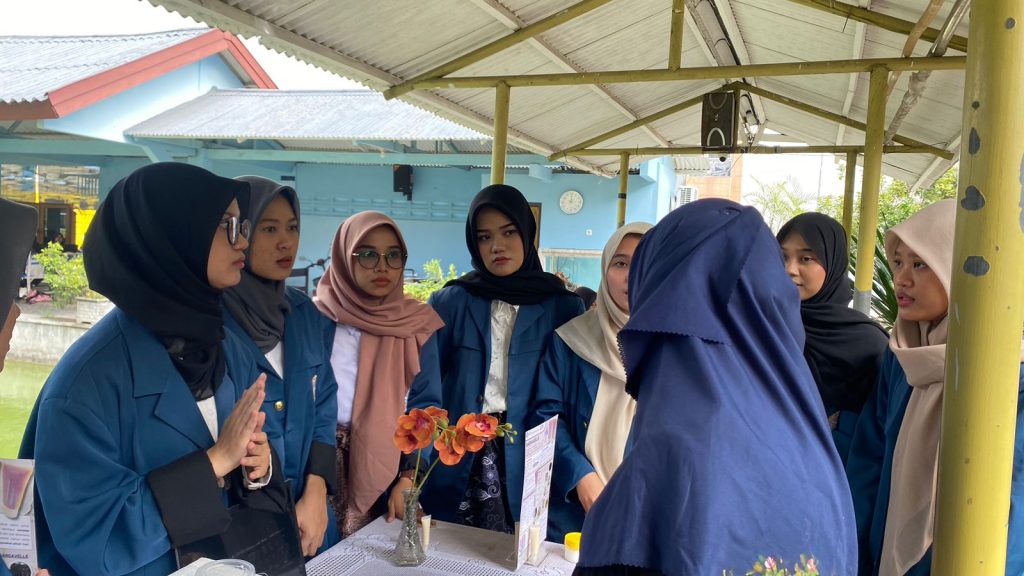
On June 2, 2025, the Faculty of Fisheries and Marine Sciences (FPK) at Universitas Airlangga hosted a unique showcase where sixth-semester students of the Fishery Product Technology program turned classroom theory into tangible innovations. Beyond lectures and discussions, students demonstrated that algae—both micro and macro—hold far greater potential than just academic study. Their independent practicum in Micro- and Macroalgae Biotechnology transformed them from learners into creators of experimental products with real economic and environmental value.
The event, held at the FPK campus area, allowed students to present their experimental products to the public as part of their course evaluation and a celebration of research-based creativity. Among the showcased innovations, several stood out for their novelty and practical potential. These included alginate-based hydrogel, natural sunscreen derived from Spirulina, and catfish sausages. While not the main focus of the practicum, these products serve as concrete examples of translating biotechnology theory into real-world applications. The alginate hydrogel, for instance, highlights the potential for sustainable materials in medical and cosmetic industries. Spirulina-based sunscreen is more than just an eco-friendly skincare idea—it represents a safe, local microalgae-based UV protection solution beneficial both for skin and the marine environment. Meanwhile, catfish sausages illustrate how biotechnology can enhance culinary applications, combining local protein sources with advanced fishery product technologies.
The students’ creations demonstrate not only academic competence but also innovation with tangible benefits for society. By linking biotechnological research with sustainable development goals, they address pressing challenges such as functional food production, environmental sustainability, and eco-friendly cosmetic solutions. This hands-on experience empowers students to explore the intersection of science, industry, and entrepreneurship while enhancing their problem-solving and creative skills. The expo emphasized how campus laboratories can serve as hubs for innovations that extend beyond the classroom and contribute meaningfully to local communities and industries.
FPK Unair’s initiative also highlights the faculty’s commitment to fostering research-driven learning and preparing students for future roles as technologists and innovators in the aquaculture and marine biotechnology sectors. The event provided an opportunity for students to engage with faculty, peers, and the public, presenting their prototypes and discussing potential improvements or commercialization strategies. By combining rigorous scientific methods with practical applications, these future technologists are shaping a new generation of sustainable, bio-based industries in Indonesia.
Overall, the June 2 exhibition underscored the transformative power of experiential learning, illustrating that sixth-semester students at FPK Unair are not merely completing coursework—they are actively designing the future of Indonesia’s aquatic bioresource-based industries. Through creativity, research, and practical application, the students demonstrated that innovation can emerge from university labs and contribute to solving real-world problems, from sustainable food production to environmentally friendly materials and cosmetics.


