Measuring Program Success Objectively, LKMM-TD 2026 Introduces Students to Performance Indicators
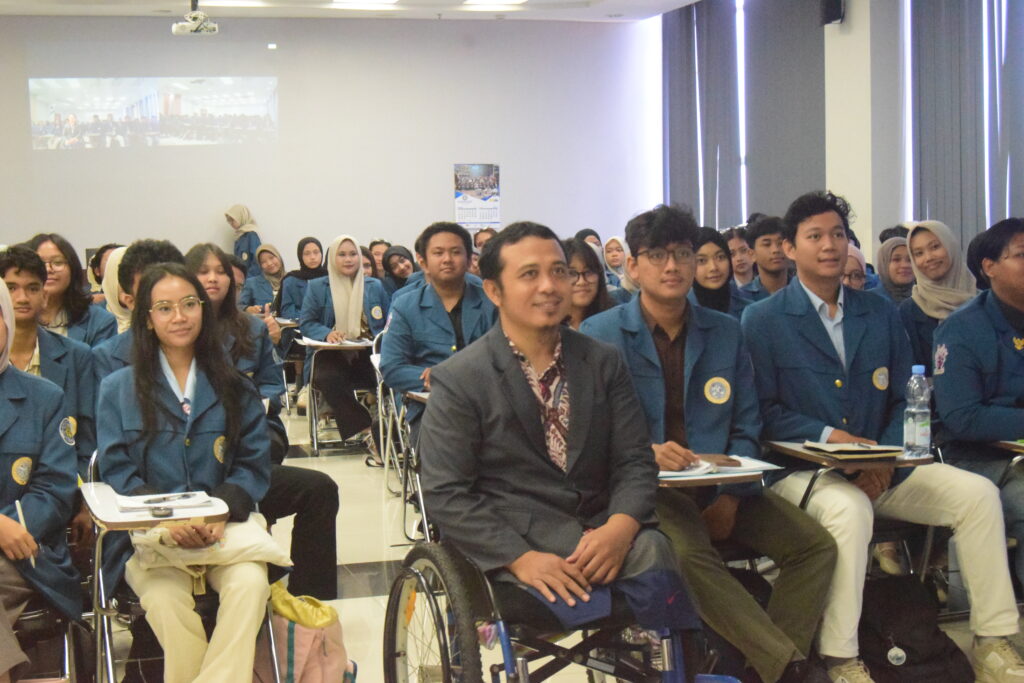
The 2026 Basic Student Management Skills Training (LKMM-TD) organized by the Faculty of Fisheries and Marine Sciences (FPK), Universitas Airlangga, continued to strengthen students’ organizational competencies through a series of fundamental management-related materials. One of the sessions delivered on the first day focused on Performance Measurement and Success Indicators, presented by Dr. Rozi, S.Pi., M.Biotech. The session emphasized the importance of establishing clear and measurable indicators as a foundation for evaluating organizational programs and activities.
Held at Building C of FPK Universitas Airlangga, the session introduced participants to the concept that every organizational program should be designed with predefined measures of success. Without clearly established indicators, organizations may face difficulties in determining whether their objectives have been achieved. Through this material, students were encouraged to adopt a more systematic and evidence-based approach to planning, implementing, and evaluating organizational activities.
Understanding the Importance of Success Indicators in Organizational Management
During the session, Dr. Rozi explained that success indicators serve as measurable benchmarks used to assess the outcomes of a program while also functioning as minimum targets established during the planning process. These indicators not only support evaluation efforts but also provide direction and clarity regarding what an organization intends to accomplish throughout program implementation. As a result, every activity can be measured against agreed standards, enabling a more objective assessment of performance.
The discussion began by highlighting the importance of understanding organizational conditions and defining intended outcomes before determining how success should be measured. According to Dr. Rozi, organizational achievements cannot be evaluated solely through subjective perceptions. Instead, success must be assessed using parameters that have been systematically formulated and mutually agreed upon from the outset of a program.
Participants were also introduced to the concept of benchmarking, a learning process that involves comparing organizational practices with those of other institutions or organizations. Benchmarking enables organizations to identify best practices, recognize areas requiring improvement, and gain inspiration for developing more effective programs. However, Dr. Rozi emphasized that benchmarks themselves are not direct solutions to organizational problems. Rather, they serve as supporting tools that facilitate assessment, reflection, and informed decision-making.
Another important aspect discussed during the session was the formulation of effective success indicators. Dr. Rozi stressed that indicators should be written using clear and understandable language. They should avoid ambiguity and multiple interpretations that may lead to inconsistent evaluations among organizational members. Well-defined indicators play a crucial role in ensuring that evaluation processes remain objective, transparent, and accountable.
According to Dr. Rozi, success indicators fulfill several key functions within organizational management. First, they serve as instruments for measuring the level of achievement of a particular program. Second, they promote objectivity throughout the evaluation process. Third, they generate valuable information that can be used to improve future activities and organizational performance. Consequently, the development of success indicators should not be treated merely as an administrative requirement but rather as an essential component of the organizational management cycle.
Applying SMART Principles and POACE Strategies for Better Organizational Outcomes
One of the central topics of the session was the application of the SMART framework in developing success indicators. SMART stands for Specific, Measurable, Achievable, Realistic, and Time-Based. Through this framework, participants learned that effective organizational goals must be clearly defined, quantifiable, attainable, realistic according to available resources and circumstances, and accompanied by a specific timeframe. The SMART approach provides practical guidance for creating targets that are focused, achievable, and easier to evaluate.
In addition to SMART, participants were introduced to the POACE management strategy, which consists of Planning, Organizing, Actuating, Controlling, and Evaluating. This framework was presented as a fundamental organizational management model that supports effective program implementation. Within the POACE cycle, success indicators play a particularly important role during the controlling and evaluating stages, where they help determine whether activities are progressing according to plan and achieving expected outcomes.
Dr. Rozi further explained several dimensions that can be used as success indicators in organizational programs. These include timeliness of implementation, efficiency in budget utilization, participant engagement levels, and the performance of committees or organizational teams. The indicators selected should be aligned with the objectives and characteristics of each program to ensure their relevance and representativeness.
The session also explored techniques for formulating effective indicators. Participants learned that indicators are generally more useful when expressed quantitatively, as numerical measures can be compared more easily against predetermined targets. Furthermore, indicators should specify the minimum standards or quality benchmarks expected from a program, allowing organizations to assess outcomes more objectively and consistently.
To deepen participants’ understanding, Dr. Rozi provided examples illustrating the difference between broad and vague indicators and those that are specific and measurable. Through these examples, students gained practical insights into how well-constructed indicators contribute to accurate evaluations and meaningful organizational learning.
Practical Exercises Strengthen Students’ Evaluation and Planning Skills
As part of the implementation phase of the learning process, participants engaged in group exercises designed to simulate the organization of academic-support activities such as training programs, workshops, and field visits. Each group was tasked with developing a set of success indicators and corresponding benchmarks for their proposed activities. This exercise enabled students to apply theoretical concepts directly while enhancing their analytical and planning skills.
The practical session encouraged participants to consider how different indicators could be used to evaluate various aspects of a program. Students discussed methods for measuring participation rates, program effectiveness, budget efficiency, and achievement of objectives. Through collaborative discussions, they developed a deeper appreciation for the importance of evidence-based evaluation in organizational management.
The activity also strengthened students’ ability to align organizational goals with measurable outcomes. By designing indicators that reflected realistic expectations and organizational priorities, participants learned how to create evaluation systems capable of supporting continuous improvement. These competencies are particularly relevant for students involved in student organizations, committees, and leadership roles within the university environment.
Through the Performance Measurement and Success Indicators session, LKMM-TD 2026 participants gained a comprehensive understanding that the success of an activity is determined not merely by its implementation, but by the extent to which predefined objectives are achieved and objectively measured. The ability to formulate appropriate performance indicators is expected to become an essential competency for students as future organizational leaders, enabling them to manage programs in a professional, effective, and results-oriented manner.
This material also aligns with Universitas Airlangga’s commitment to supporting the Sustainable Development Goals (SDGs), particularly SDG 4 (Quality Education) through the enhancement of students’ competencies in planning, evaluation, and data-driven decision-making. Furthermore, the ability to establish clear objectives and measurable success indicators contributes to SDG 17 (Partnerships for the Goals) by fostering more accountable, measurable, and sustainable collaborative programs.
Author: Alejandro Ahmad Zuhayr
Editor: TPA