08 January 2026
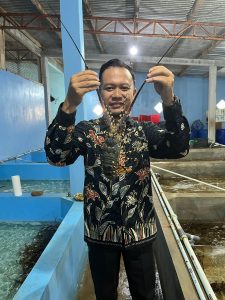
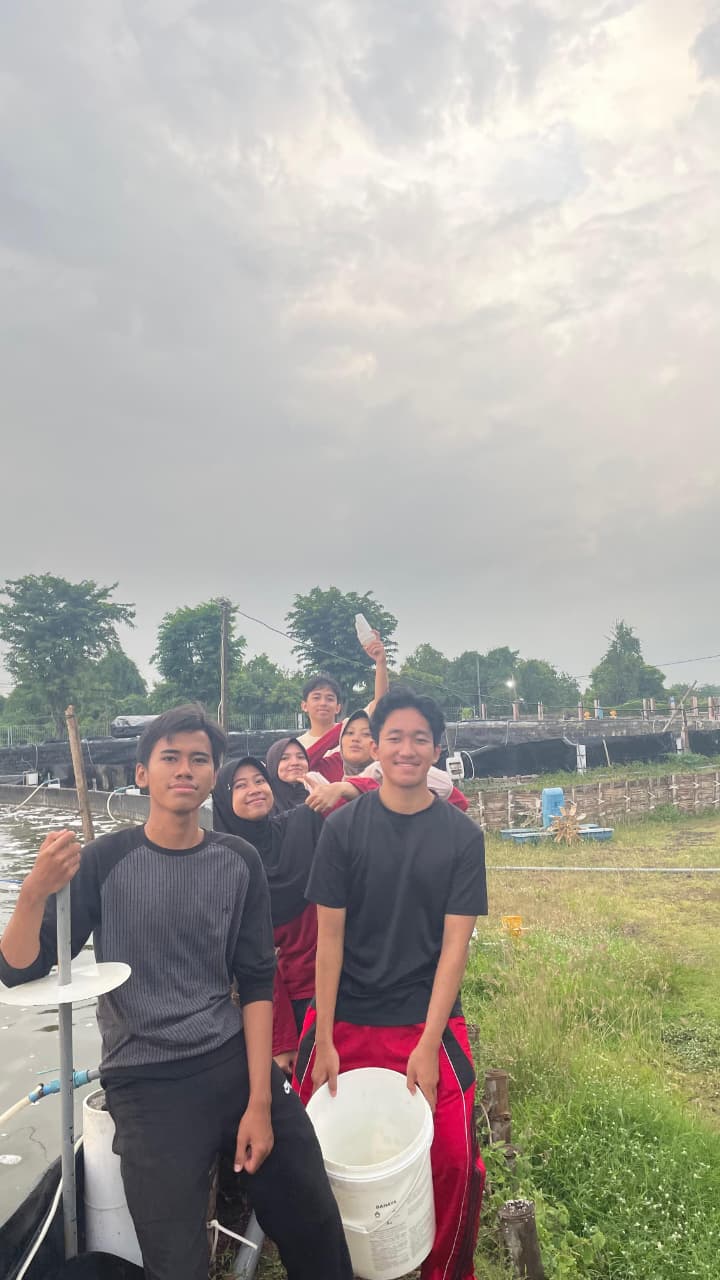
Students of the Aquaculture Study Program, Faculty of Fisheries and Marine Sciences, Universitas Airlangga (FPK UNAIR), participated in an internship program at the Bangil Brackishwater Aquaculture Facility (IBAP Bangil), East Java, to strengthen practical skills and professional readiness. The internship was conducted from 29 December 2025 to 18 January 2026 and focused on hands-on experience in sustainable vannamei shrimp (Litopenaeus vannamei) aquaculture practices.
The internship involved eight Aquaculture students of FPK UNAIR: Alief Fibi Yanto, Tsaniyatun Muntafi’ah, Sani Lutfiyanti, Loise Gabriele Sigarlagi, Adinda Keisha Saputri, Feby Aqirla, Deva Zia’ul Haq K, and Hilmi Azam Falah S. Throughout the program, students actively engaged in daily pond operations under the supervision of experienced technicians at IBAP Bangil.
IBAP Bangil was selected due to its relevance to students’ academic interests, particularly in vannamei shrimp, a strategic commodity for food security and coastal economic development. The facility also provides adequate infrastructure and professional guidance to support experiential learning aligned with academic theory.
During the internship, students carried out routine water quality monitoring twice daily, in the morning at approximately 08.00 after the morning assembly and in the afternoon at 16.00. Physical parameters observed included temperature, water transparency, and depth, while chemical parameters comprised pH, dissolved oxygen (DO), and salinity.
Students were also involved in weighing feed rations and administering probiotics such as MITAN, NSP, and molasses. Feeding activities were conducted based on environmental conditions and shrimp health status. Feeding trays (anco) were installed in ponds to monitor shrimp appetite, enabling more efficient and precise feed management.
Through this internship, students gained direct knowledge of pond aeration systems, including surface aerators (paddle wheels) and bottom aeration systems known as uniring. Bottom aeration provides finer oxygen bubbles, improving oxygen distribution near the pond floor, although it requires frequent maintenance due to sediment accumulation.
In addition, students learned about major vannamei shrimp diseases such as Enterocytozoon hepatopenaei (EHP), Acute Hepatopancreatic Necrosis Disease (AHPND), White Feces Disease (WFD), and White Spot Syndrome Virus (WSSV). This knowledge is essential for disease prevention and sustainable shrimp health management.
Unstable weather conditions posed challenges during the internship, particularly during heavy rainfall, which complicated water quality monitoring. Disease outbreaks also temporarily reduced shrimp appetite, requiring adjustments to feeding schedules and dosages. These conditions enhanced students’ adaptive capacity in responding to environmental changes, aligning with climate change mitigation efforts.
This internship supports the Sustainable Development Goals (SDGs), including SDGs 2 (Zero Hunger) through sustainable shrimp production, SDGs 14 (Life Below Water) through responsible aquaculture practices, and SDGs 13 (Climate Action) by fostering adaptive management to climate variability. It also contributes to SDGs 1 (No Poverty) by enhancing graduate employability and SDGs 17 (Partnerships for the Goals) through collaboration between FPK UNAIR and IBAP Bangil.
Participants expressed that the internship provided valuable hands-on experience in vannamei shrimp farming, encompassing water quality management, feeding strategies, and disease control. They hope the internship program will continue to be developed with improved facilities and more intensive mentoring to maximize learning outcomes for future students.