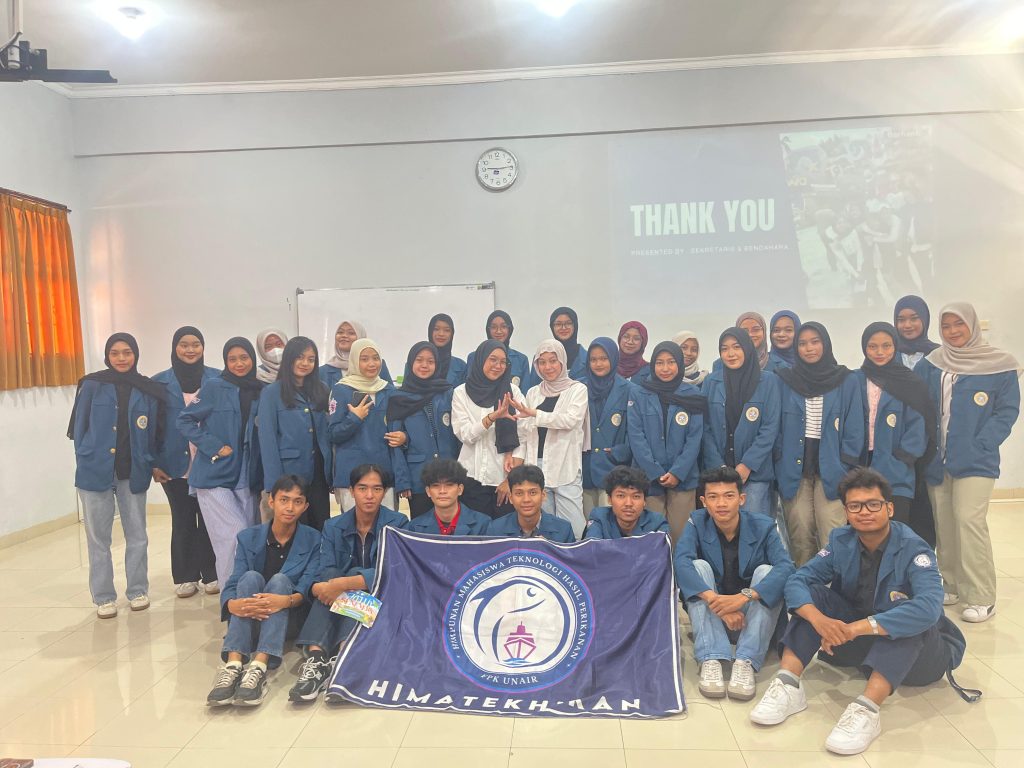

The Fisheries Product Technology Student Association (HIMATEKHIKAN) of the Faculty of Fisheries and Marine Sciences, Universitas Airlangga (FPK UNAIR) for the 2026 period once again demonstrated its dedication to strengthening organizational governance by organizing the Writing Learning Class, also known as the Proposal and Accountability Report (LPJ) Class. The program was conducted on Saturday, February 28, 2026, at Room B.304 of the Faculty of Fisheries and Marine Sciences building and was held offline in an interactive and engaging learning atmosphere. The activity aimed to equip HIMATEKHIKAN members with practical administrative skills essential for ensuring effective organizational management. Serving as the main speakers were the 2025 HIMATEKHIKAN Secretary General and Treasurer, Vannia Aulia Nasthit and Samy Aini, who shared their experiences and best practices in managing student organization administration. Their presence provided participants with real-world insights into administrative workflows, emphasizing accuracy, accountability, and institutional compliance within student activities.
The implementation of the Writing Learning Class responded to the growing need for administrative capacity building among HIMATEKHIKAN members in 2026. Within student organizations, the ability to prepare activity proposals and accountability reports plays a crucial role in ensuring that programs are well-planned, measurable, and sustainable. During the session, participants were introduced to comprehensive materials covering proposal structure, including background formulation, objectives, activity concepts, and the preparation of effective and transparent budget plans. In addition, the speakers explained the systematic preparation of accountability reports as an essential form of organizational responsibility toward implemented programs. Rather than focusing solely on theoretical explanations, the facilitators provided authentic document examples and practical guidance to help participants avoid common administrative mistakes. This applied learning approach enabled students to better understand real administrative processes and immediately apply the knowledge within their organizational responsibilities.
The learning environment was highly conducive, marked by active participation and enthusiasm from HIMATEKHIKAN members attending the session. Two-way discussions became a defining feature of the program, as participants raised questions regarding technical challenges frequently encountered when drafting proposals and accountability reports. The facilitators addressed these concerns by offering practical solutions and strategies for creating more efficient documents aligned with faculty standards. This collaborative interaction fostered a dynamic academic atmosphere while reinforcing a culture of discussion-based learning and collective capacity development. Participants expressed positive feedback regarding the program’s impact, noting that the class helped them better understand the importance of administrative detail in ensuring program approval and organizational effectiveness. Hands-on examples were particularly appreciated, as they clarified common errors and improved participants’ confidence in preparing administrative documents.
One participant shared that the program provided new perspectives on organizational administration, highlighting how structured proposal preparation can significantly increase the likelihood of program approval. Another participant emphasized that reviewing real document samples was the most beneficial aspect of the session, as it allowed members to identify potential mistakes before preparing their own accountability reports. These testimonials reflected the program’s success in bridging theoretical understanding with practical application, ultimately strengthening students’ administrative literacy within organizational contexts. The interactive format also encouraged peer learning and collaboration, supporting the development of professional skills beyond academic coursework.
The primary objective of the Writing Learning Class was to enhance members’ competencies in administrative management and program planning. The expected outcomes include improved organizational documentation quality that is more systematic, organized, and aligned with institutional standards. More broadly, the initiative supports the implementation of transparent and accountable governance values within the FPK UNAIR student environment. Strengthening administrative capacity contributes to more effective organizational collaboration, aligning with the spirit of Sustainable Development Goals (SDGs) 17 (Partnerships for the Goals) through improved student organization management quality. Furthermore, improved program planning quality has the potential to support student initiatives contributing to sustainable fisheries development, in line with SDGs 14 (Life Below Water) and SDGs 13 (Climate Action) through responsible and well-directed activity planning.
Enhanced administrative competencies also open opportunities for impactful community service programs that support food security and coastal community welfare, reflecting SDGs 2 (Zero Hunger) and SDGs 1 (No Poverty). One example is Mandala, a flagship community service program initiated by the Fisheries Product Technology Student Association. Mandala focuses on sustainable community engagement through continuous development within a designated partner village. Unlike short-term initiatives, the program emphasizes long-term empowerment and sustainable collaboration with local communities, ensuring lasting social and economic benefits. Through structured planning supported by strong administrative governance, such programs can be implemented more effectively and sustainably.
Through the successful implementation of the Writing Learning Class, HIMATEKHIKAN hopes to further improve organizational administrative quality throughout 2026 while fostering a professional working culture among students. The program represents a concrete step toward developing students who are not only academically competent but also capable of managing modern organizations with professionalism, accountability, and strategic planning skills. By integrating administrative excellence with academic values and community engagement, HIMATEKHIKAN continues to contribute to the development of adaptive, collaborative, and socially responsible future fisheries professionals.