

Aquaculture
Build aquaculture competencies for the future of productive, innovative, healthy, and sustainable fisheries. Explore the science and technology of aquatic farming, from hatchery production to business development.
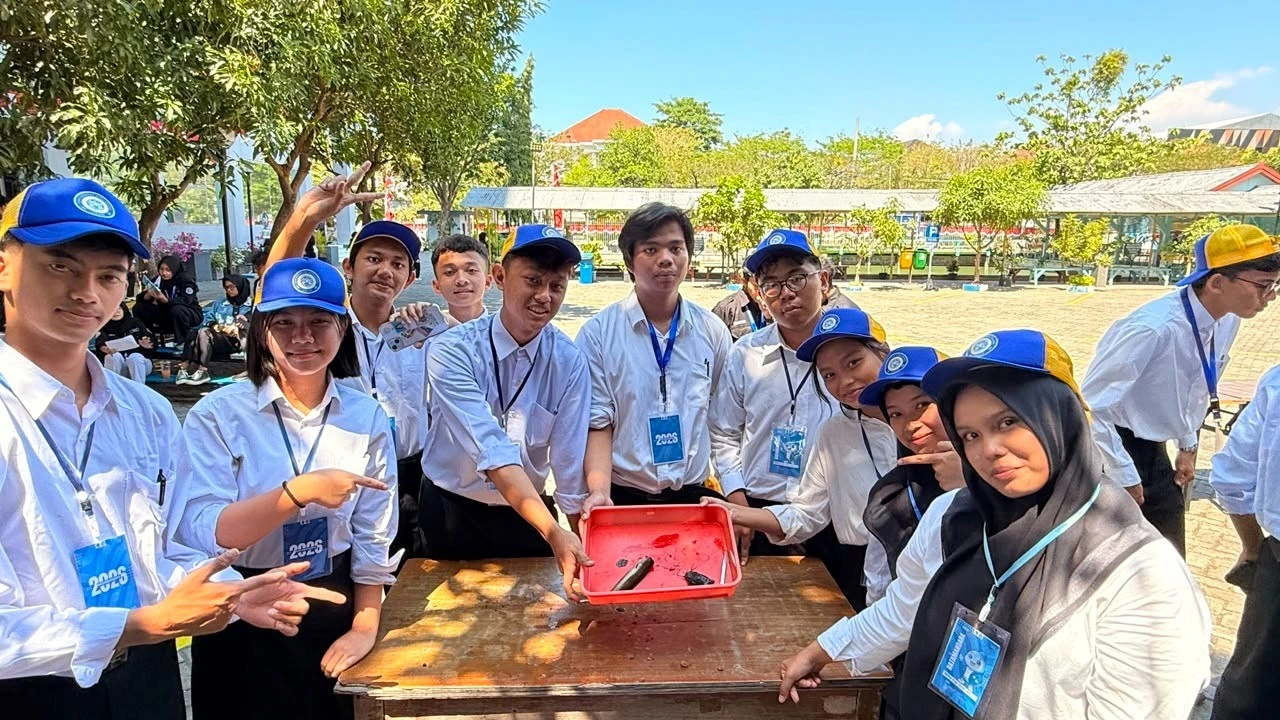


Discover the Aquaculture Undergraduate Program
The Aquaculture Undergraduate Program at the Faculty of Fisheries and Marine, Universitas Airlangga, focuses on mastering, developing, and applying science and technology in aquatic farming.
This study program was previously known as Aquatic Resources Cultivation Undergraduate Program and officially changed to the Aquaculture Undergraduate Program in 2018.
In its development, the study program places particular emphasis on fish diseases and aquatic environmental health as one of its distinctive academic strengths.
Students are equipped to understand aquaculture systems comprehensively through a combination of theory, practical sessions, research, field experience, technology, business management, and entrepreneurship.
These competencies prepare graduates to develop innovative and sustainable solutions for the needs of future fisheries.
Learning Aquaculture Comprehensively
Competencies are developed through interconnected fields of study, from cultured organisms to the environment and business.
Aquaculture Systems
Hatchery production, grow-out, harvesting, and management of fish farming systems in freshwater, brackishwater, and marine environments.
Environmental Quality & Health
Water quality, aquatic ecology, plankton, pollution, and environmental management to support sustainable aquaculture.
Fish Health & Diseases
Study of parasitic, bacterial, fungal, and viral diseases, along with prevention and control strategies.
Biotechnology & Technology
Molecular biology, genetics, breeding, reproduction, and the application of biotechnology for aquaculture development.
Nutrition & Feed
Nutritional requirements of fish and shrimp, feed formulation, feed production technology, and natural feed development.
Business & Entrepreneurship
Business analysis, business planning, business management, and entrepreneurship development in aquaculture.
Academic Journey Roadmap
Learning is designed progressively, from scientific foundations to professional experience and research.
Academic & Scientific Foundations
Biology · Chemistry · Pancasila · Language · Critical Logic & Thinking · Communication
Aquaculture Fundamentals
Aquaculture Fundamentals · Ichthyology · Aquatic Ecology · Microbiology · Biochemistry · Aquatic Animal Physiology
Environment & Technology
Water Quality · Planktonology · Aquaculture Engineering · Fisheries Biology · Oceanography · Statistics
Aquaculture Core
Hatchery Production · Nutrition · Reproduction · Genetics & Breeding · Parasitology · Pathology
Aquaculture Management
Freshwater Aquaculture · Brackishwater Aquaculture · Mariculture · Fish Diseases · Research Methodology
Technology & Innovation
Biotechnology · Feed Technology · Viral Diseases · Natural Feed · Pollution · Entrepreneurship
Professional Experience
Field Work Practice · Professional Experience · Applied Competency Development.
Research & Final Project
Final Project Proposal · Research · Analysis · Final Project.
From Laboratory to Field
Competency development goes beyond theory. Students are guided to understand aquaculture processes from multiple perspectives.
Hatchery Production
Seed production technology, broodstock selection, reproduction, environmental manipulation, and hatchery technology.
Nutrition & Feed
Nutritional requirements, formulation, production, and evaluation of feed for fish and aquatic organisms.
Water Quality
Management of physical and chemical water parameters, aeration, filtration, recirculation, and plankton.
Fish Health
Identification, analysis, prevention, and control of fish and shrimp diseases.
Biotechnology
Utilization of modern technologies for the development of freshwater, brackishwater, and marine aquaculture.
Management & Business
Technical, social, economic, administrative, financial, and business management in aquaculture.
Expanding Perspectives to the Sea
Under the latest curriculum development, the Aquaculture Undergraduate Program also offers an Ocean Science and Technology (ITK) area of interest. This area broadens students’ learning from aquaculture systems to a wider understanding of marine environments and resources.
Learning Through Real-World Experience
Learning is designed through a combination of theory, practical sessions, field experience, research, and various learning schemes outside the study program.
Lectures
Understanding concepts and theories.
Practical Session
Applying knowledge through laboratory activities.
Field Work Practice
Direct experience in a professional environment.
Research
Scientific analysis and problem-solving.
MBKM
Learning experience outside the study program.
Learning with Laboratory Support
Learning facilities support students in developing academic and technical skills in aquaculture.
Laboratories
- Fish Anatomy and Aquaculture Laboratory
- Chemistry and Analysis Laboratory
- Microbiology and Fish Diseases Laboratory
- Fish Nutrition and Feed Laboratory
- Natural Feed Laboratory
- Laboratories Biotechnology
- Computer Laboratory
Practical Facilities
- Educational Fish Pond
- Aquaponic Pond
The Educational Fish Pond is one of the practical facilities for Aquaculture undergraduate students to understand aquaculture systems through hands-on application.
What Can You Become After Graduation?
The Aquaculture undergraduate program prepares graduates to pursue careers in professional practice, research, management, and entrepreneurship.
Researcher & Technology Developer
Develop new knowledge and technologies through research in aquaculture and fisheries.
Aquaculture Manager
Manage fish farming systems and businesses across various aquatic environments.
Fisheries Resource Manager
Contribute to fisheries resource management in governmental and non-governmental institutions.
Fisheries Extension Specialist
Support communities through knowledge transfer, training, and capacity building.
Fisheries Consultant
Provide professional recommendations and assistance in fisheries business development.
Aquaculture Entrepreneur
Develop independent businesses and business innovations in aquaculture.
Vision and Mission
Excellent and Sustainable Aquaculture
To become a nationally recognized study program with excellence in mastering, developing, and applying science and technology in aquatic farming, particularly in fish diseases and aquatic environmental health, while pioneering independent education and research in fisheries science based on religious values, ethics, and environmental sustainability, with a continued commitment to community welfare.
Mission
Provide academic education in aquatic farming based on modern learning technologies.
Develop innovative, high-quality basic and applied research and policies in aquatic farming.
Apply expertise in aquatic farming for the benefit of society.
Develop partnerships and science and technology information systems with relevant government and private institutions.
Accreditation and Recognition
Quality recognition is an important part of the development of the Aquaculture Undergraduate Program at FPK UNAIR.
The Aquaculture Study Program holds national accreditation status of Excellent based on Decree No. 5955/SK/BAN-PT/Ak.Ppj/S/IX/2024.
This status is valid until 30 September 2029.
The Aquaculture Study Program has also received international recognition through ASIIN for the period from June 28, 2019 to September 30, 2024.
Study Program Accreditation Certificate
Click the certificate to view the document in full size.