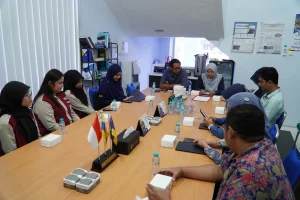
Mojokerto – The ECOFISH 1.0 team from the Student Scientific Studies (KAKEMA) of the Faculty of Fisheries and Marine, Universitas Airlangga, carried out a series of activities involving the production of starter bacteria, alternative feed, and the stocking of tilapia fingerlings at Sumber Gempong Tourism Village, Ketapanrame Village, Trawas District, Mojokerto Regency, from 12–14 July 2026. The activities were part of a community service program funded by the SDGs Universitas Airlangga 2026, supporting the implementation of efficient, economical, and sustainable biofloc-based tilapia farming.
The activities were carried out in stages alongside the Sumber Gempong Tourism Village partners, beginning with bacterial culture preparation and the production of alternative feed from local materials, followed by the stocking of tilapia fingerlings. Through these activities, the ECOFISH 1.0 team sought to enhance community capacity in developing environmentally friendly and easily applicable aquaculture technologies.
Preparing the Biofloc System through Starter Bacteria Production
The activities began on 12 July 2026 with the production of starter bacteria as one of the preparatory stages for the biofloc system. The starter bacteria were produced using 1 kg of melted palm sugar mixed with 260 mL of a beverage containing Lactobacillus casei bacteria. All materials were then stirred until homogeneous and placed in a fermentation container.
The production of starter bacteria aimed to support the formation of bioflocs and assist in the management of organic waste in the pond. With proper water quality management, the biofloc system is expected to create a more stable farming environment for tilapia growth.
Utilizing Local Materials as Alternative Feed
On 13 July 2026, the activities continued with the production of alternative feed using local raw materials. The materials consisted of 10 kg of shell-free chicken egg waste, 5 kg of tofu pulp, 9 kg of fine bran, 1 kg of Azolla sp., and 0.5 kg of tapioca flour as a binder.
All materials were mixed until homogeneous before being processed into feed ready for use in the farming activities. The utilization of local materials not only has the potential to reduce production costs but also serves as an effort to transform organic waste into materials with functional and economic value. This step supports the implementation of a more efficient and sustainable aquaculture system.
Fingerling Stocking Marks the Beginning of Biofloc Pond Operations
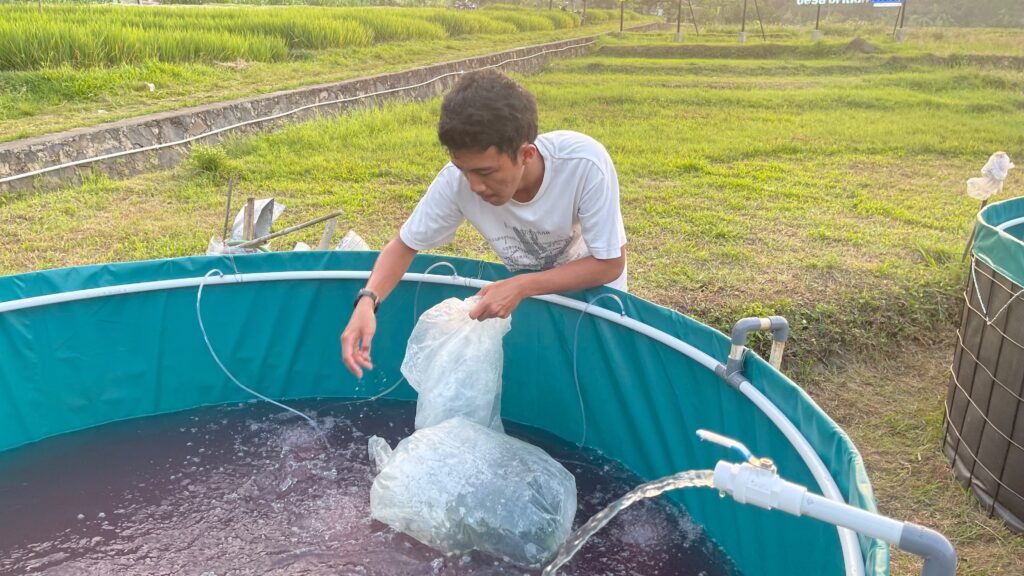
The next stage was carried out on 14 July 2026 through the stocking of 400 tilapia fingerlings into the prepared biofloc pond. Before stocking, the fingerlings underwent water quality checks and an acclimatization process to reduce stress caused by environmental changes.
The stocking of the fingerlings marked the beginning of the tilapia rearing process in the biofloc system. Water quality management, feed availability, and regular monitoring of fish conditions are important components in supporting the success of the aquaculture activities.
Promoting Sustainable Aquaculture through Community Empowerment
The ECOFISH 1.0 activities demonstrate the implementation of an integrated aquaculture system encompassing water quality management, feed provision, and fish rearing. Through these activities, the community gained knowledge of starter bacteria production, alternative feed formulation, and tilapia fingerling stocking procedures.
A representative of the Sumber Gempong Tourism Village management expressed appreciation for the program, which was considered to have provided new knowledge regarding biofloc-based tilapia farming.
“ECOFISH 1.0 has provided us with new knowledge about the biofloc farming system. We hope that programs like this can continue so that the community can develop fish farming independently and sustainably,” the representative said.
The activity also supported SDG 2 (Zero Hunger) through increased fisheries-based food production, SDG 13 (Climate Action) through the implementation of more environmentally friendly aquaculture technology, SDG 14 (Life Below Water) through sustainable aquatic resource management, and SDG 17 (Partnerships for the Goals) through collaboration between higher education institutions, the village government, and the community.
Through the implementation of easily adoptable technology, ECOFISH 1.0 is expected to serve as a foundation for the development of community-based tilapia farming that provides sustainable economic, social, and environmental benefits.
Writer: Nila Najwa
Editor: Farrel Bhanu Mahardhika