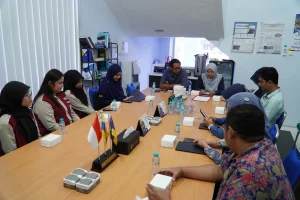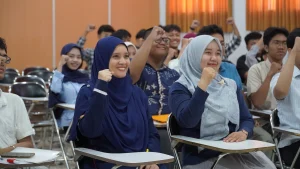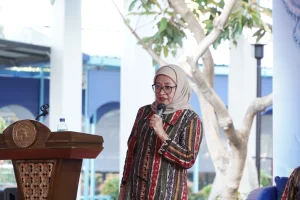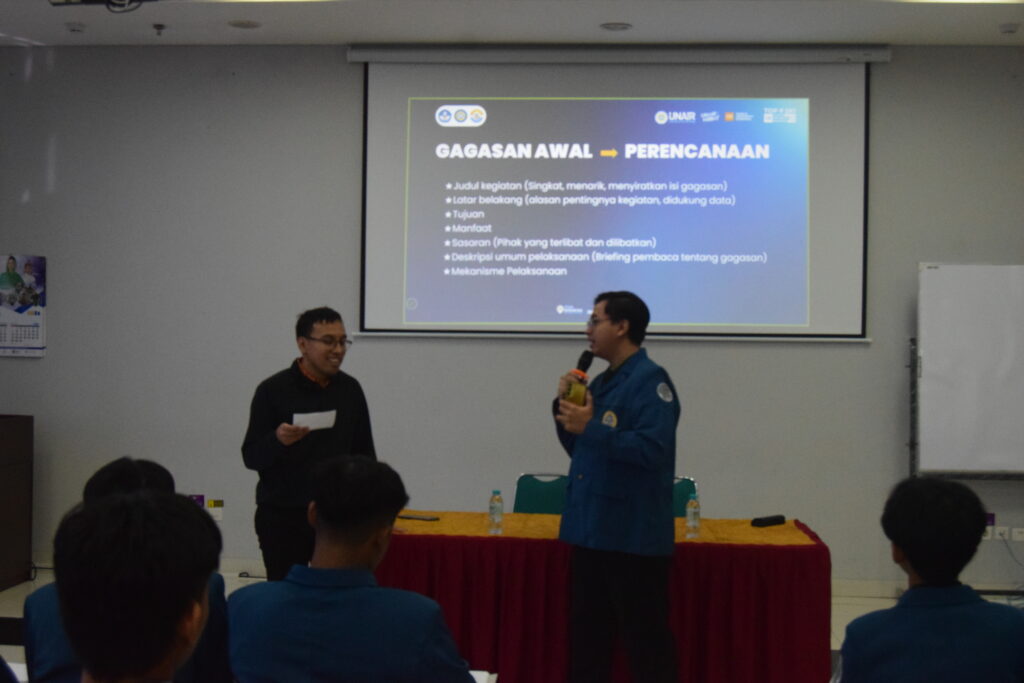
The 2026 Basic Student Management Skills Training (LKMM-TD) of the Faculty of Fisheries and Marine Sciences (FPK), Universitas Airlangga, not only equipped participants with organizational analysis skills but also strengthened their ability to transform ideas into structured work programs. Through the session entitled Initial Idea Formulation and Elaboration, Muhammad Browijoyo Santanumurti, S.Pi., M.Sc., Ph.D., guided participants in understanding how an idea can be developed into a realistic and implementable activity concept.
The material, delivered on the first day of LKMM-TD 2026, emphasized that every organizational program begins with an idea. However, an idea alone cannot create impact if it remains merely a discussion without proper planning. Therefore, students need the ability to formulate and elaborate ideas systematically so they can be transformed into meaningful and beneficial work programs.
Understanding the Importance of Initial Idea Formulation
During his presentation, Browijoyo explained that an initial idea is a fundamental concept that emerges from identifying problems, opportunities, or needs within a particular environment. This idea serves as the foundation of a work program that can later be developed into a more structured activity. According to him, a good idea should not only be interesting to discuss but also clearly articulated and feasible to execute.
Furthermore, participants were introduced to the importance of idea formulation within student organizations. A well-formulated idea helps prevent discussions from ending without tangible outcomes. It also ensures that proposed programs remain aligned with organizational goals while facilitating proposal writing and overall activity planning.
The session also highlighted various sources of initial ideas. Program concepts may arise from organizational members’ needs, issues requiring solutions, available collaboration opportunities, improvements to routine activities, or emerging trends and current issues. By understanding these potential sources, students are encouraged to become more observant of their surroundings and develop programs that genuinely address the needs of their target audiences.
Browijoyo further explained that ideas do not emerge instantly. Instead, they undergo several stages, beginning with observation of existing situations and needs, followed by problem or opportunity identification, information gathering, idea development, and objective setting. These stages help organizations design programs with a strong foundation and a clear direction.
Techniques for Developing Ideas into Practical Programs
To assist participants in transforming ideas into comprehensive activity concepts, several practical techniques commonly used in organizations were introduced. These included brainstorming to generate ideas openly, mind mapping to visualize relationships between concepts, SWOT analysis to assess internal and external conditions, and the 5W+1H approach to systematically organize activity plans.
Through these methods, students learned how to determine what activities should be conducted, why they are important, who the target participants are, where and when the activities should take place, and how they should be implemented. These frameworks enable organizations to design programs more effectively and improve their chances of successful execution.
As part of the learning process, participants were presented with a case example titled Fisheries Workshop Series: Maintaining Mental Health through Aquascaping. Through this example, they observed how a contemporary societal issue could be developed into a program supported by a strong rationale, clear objectives, measurable benefits, and realistic implementation mechanisms. The example demonstrated that effective work programs should be based on actual needs and supported by relevant data.
In addition to theoretical explanations, participants also engaged in practical exercises that challenged them to formulate initial ideas for a fisheries and marine science study excursion. By applying the 5W+1H framework directly, students practiced designing activities from defining objectives to outlining implementation plans. This exercise simultaneously enhanced their creativity and systematic thinking skills in organizational program development.
Building Data-Driven and Impactful Organizational Programs
At the end of the session, Browijoyo emphasized the importance of utilizing data to strengthen the rationale behind a proposed activity. He also encouraged participants to avoid ideas that are overly broad or abstract and to prepare alternative plans should challenges arise during implementation. Such preparations can increase the feasibility and success rate of organizational programs.
Through the Initial Idea Formulation and Elaboration session, LKMM-TD 2026 participants gained a deeper understanding that the success of a program depends not only on creativity but also on the ability to systematically plan and develop ideas. These competencies serve as valuable assets for students in creating innovative, relevant, and impactful work programs that contribute positively to both organizations and the broader community.
The material also reflects Universitas Airlangga’s commitment to supporting the achievement of the Sustainable Development Goals (SDGs), particularly SDG 4 (Quality Education) through the enhancement of critical thinking, creativity, and planning skills among students. Moreover, the ability to formulate programs based on needs assessment and collaboration contributes to SDG 17 (Partnerships for the Goals) by encouraging initiatives that involve multiple stakeholders in achieving shared objectives.
Author: Alejandro Ahmad Zuhayr
Editor: TPA