Bojonegoro, 2025 – The Fisheries Product Technology Study Program of Universitas Airlangga continues to reaffirm its commitment to realizing the Sustainable Development Goals (SDGs). This commitment was reflected in a community service program held in Tlogorejo Village, Kepohbaru District, Bojonegoro, under the theme “Training on Fishery Product Processing.” The activity aimed to support SDG 2 (Zero Hunger) by improving food nutrition and SDG 14 (Life Below Water) through sustainable and optimal utilization of marine resources. The program actively involved both lecturers and students of FPK UNAIR in assisting local residents to develop fish-based processed products.
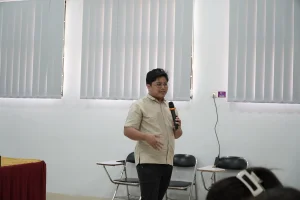
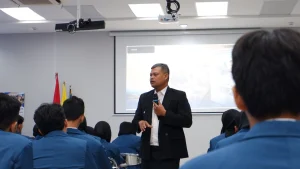
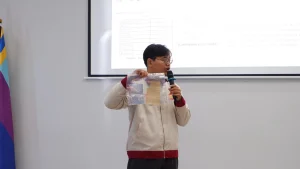
The event was attended by representatives from the Bojonegoro Livestock and Fisheries Agency, catfish farmers, and local farmer groups. The program was led by Mr. Eka Saputra, S.Pi., M.Si., who also served as the head of the community service project. He delivered a presentation on “Food Product Packaging,” highlighting the importance of proper packaging in maintaining food quality and prolonging shelf life. The interactive session encouraged participants to apply practical methods of packaging to enhance the competitiveness of their local fish-based products in the market.
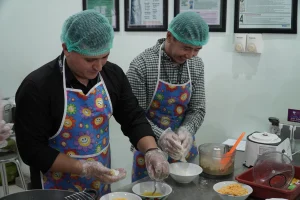
Beyond theoretical learning, the activity emphasized hands-on practice and empowerment. Participants were guided in producing various fish-based processed foods using locally available raw materials. Through this initiative, the FPK UNAIR team sought to strengthen community skills in product innovation while ensuring that fishery resources were used responsibly and sustainably. This aligns with the university’s mission to promote community welfare through science and technology applications that address local challenges.
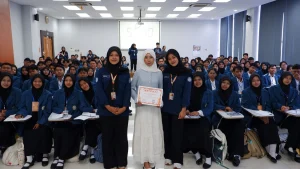
At the end of the event, FPK UNAIR lecturers symbolically handed over essential production equipment, including a food processor, a sealer, and a cracker cutter, to the residents of Tlogorejo Village. These tools are expected to enhance productivity and efficiency in fish processing, enabling the local community to produce higher-quality products that meet market standards. This gesture reflects Universitas Airlangga’s dedication to empowering rural communities through education, innovation, and sustainable development practices.
Through this program, FPK UNAIR not only contributed to improving food security and local economic growth but also demonstrated its academic responsibility to foster community-based innovation. The initiative underscored how higher education institutions can act as catalysts for transformation, bridging scientific knowledge with real-world impact for a more sustainable future.