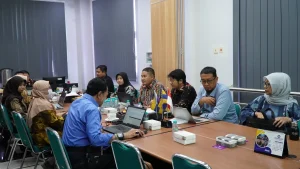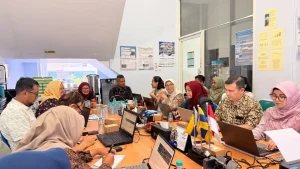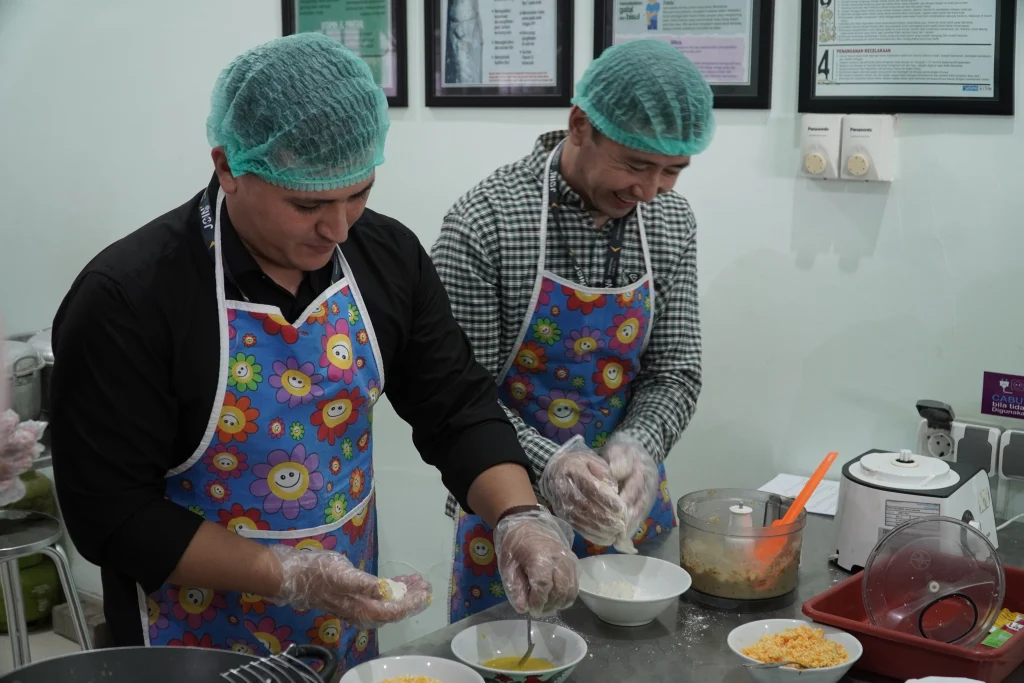
Surabaya – The 2026 Join International Class (JIC) program at Universitas Airlangga (UNAIR) continued with a hands-on fish processing activity at the Faculty of Fisheries and Marine (FPK) UNAIR on Wednesday (12 August 2026). Following cross-country learning sessions, JIC participants were introduced to the application of fish processing technology through a practical session on making tilapia-based nuggets at the FPK UNAIR Fish Processing Laboratory.
The activity was part of the JIC 2026 learning series, which carries the theme “Connecting Global Minds Through Collaborative Learning.” Eight participants from Indonesia, Ethiopia, Afghanistan, Malaysia, and Timor-Leste took part in the activity, bringing together academic learning and practical experience in fish processing.
Turning Tilapia into a Value-Added Food Product
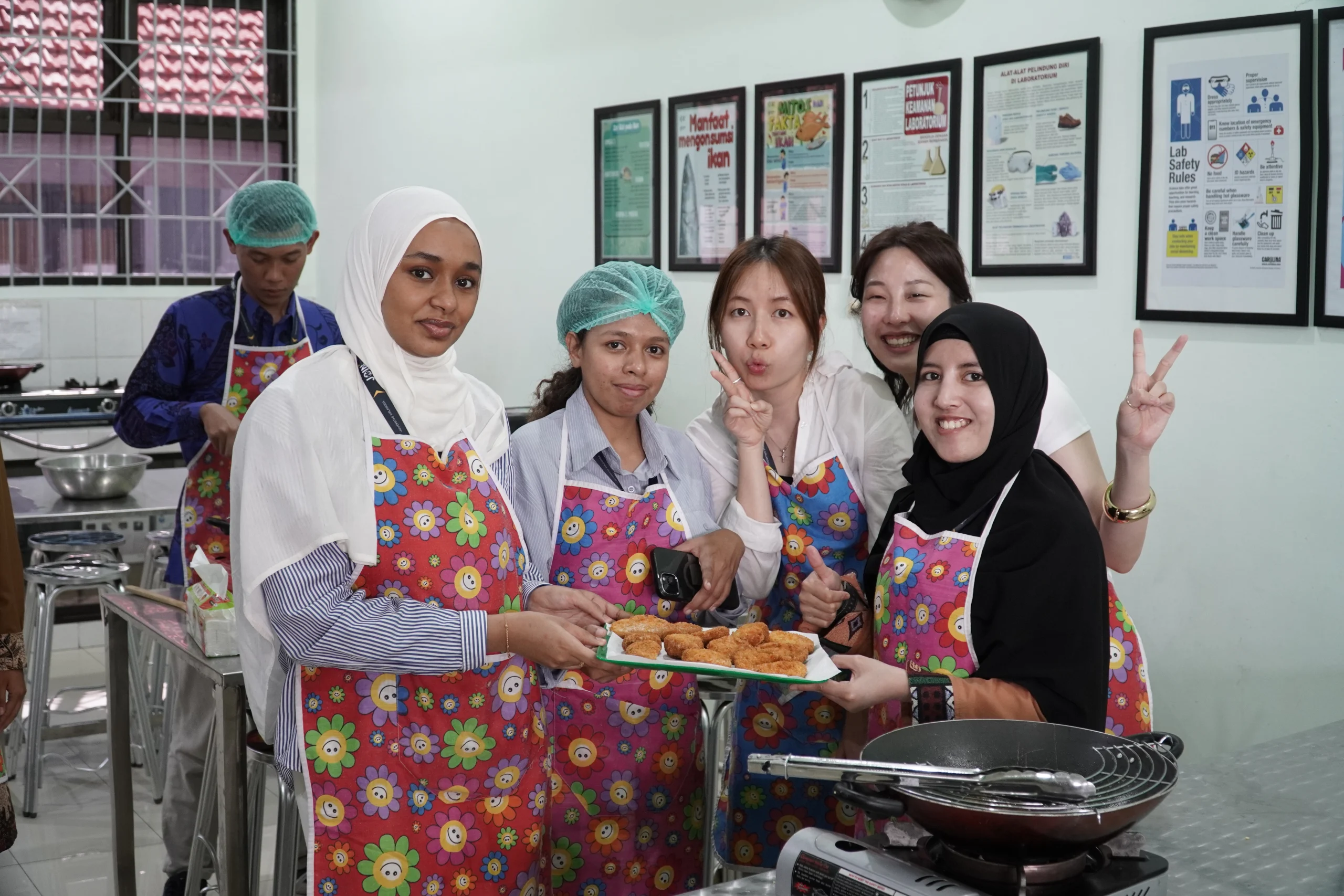
During the practical session, tilapia was used as the main ingredient for making nuggets. Participants were introduced to the process of transforming fish into a more practical food product with added value. The activity provided participants with direct insight into how fisheries commodities can be further developed through processing technology to produce food products that are closer to consumer needs.
The practical session took place at the FPK UNAIR Fish Processing Laboratory under the guidance of three members of the Fisheries Processing Club (FPC), namely Alfina Sholihatin A’maliah, Ayunita Dwi Sifana, and Umar Asadullah Al Mubarak. Their assistance helped participants follow each stage of the nugget-making process while also providing an opportunity for direct interaction with FPK UNAIR students.
Learning Through Direct Experience
The hands-on activity expanded the learning experience offered through JIC 2026. While cross-country learning commonly takes place through discussions and knowledge exchange, the laboratory session provided participants with an opportunity to learn through direct experience. Interactions throughout the practical session also created a space for participants to exchange knowledge and experiences shaped by their different national backgrounds.
The use of tilapia as the main ingredient also introduced participants to one form of fisheries product diversification. The processing activity aligns with SDG 2 (Zero Hunger) by promoting the development of fisheries-based food sources and increasing the added value of food ingredients. Meanwhile, the hands-on laboratory experience supports SDG 4 (Quality Education) by combining theoretical knowledge with practical and applicable skills.
Strengthening Global Collaboration Through Education
The activity at FPK UNAIR further strengthened the spirit of collaboration embedded in JIC 2026. Through interactions between participants from different countries and the academic community of FPK UNAIR, learning took place not only through the exchange of ideas but also through shared experiences in the laboratory. This reflects the spirit of SDG 17 (Partnerships for the Goals) by fostering international networks and cross-border collaboration through education.
Writer: Fahmi Bayhaqi A
Editor : TPA