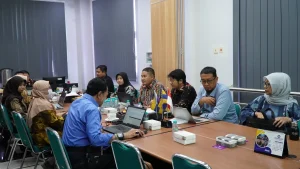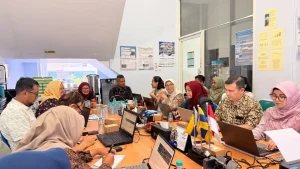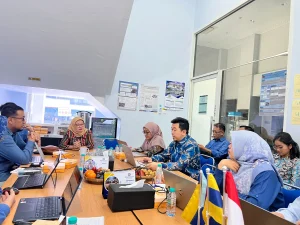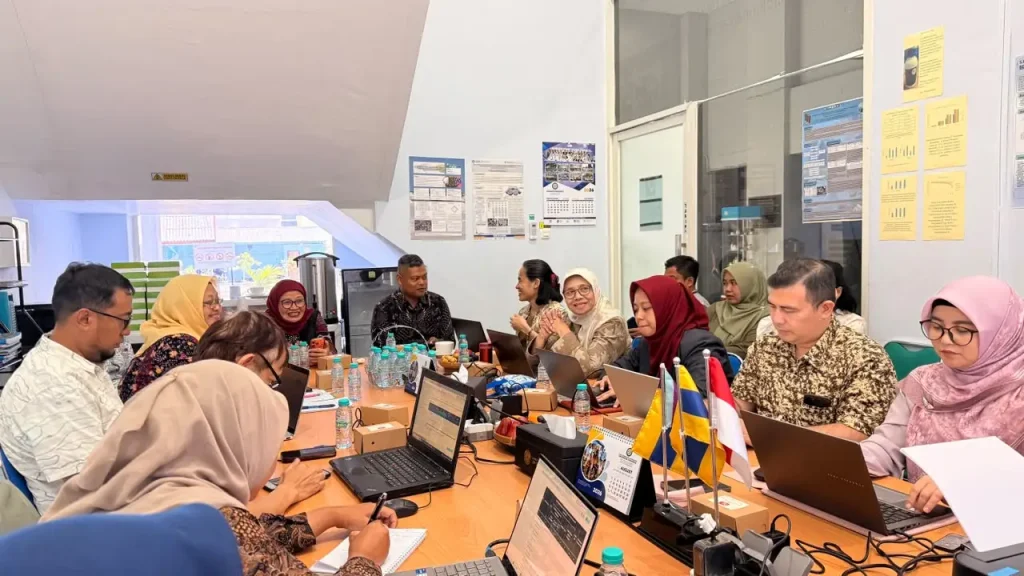
The Faculty of Fisheries and Marine (FPK) Universitas Airlangga (UNAIR) conducted an Internal Quality Audit (AMI) for its Master’s Program in Fisheries and Marine Biotechnology on Tuesday (8/9/2026).
The activity began at 9:00 AM WIB in the Garam Room, FPK UNAIR. It reflected the faculty’s commitment to maintaining and improving educational quality.
Faculty leaders and members of the academic community participated in the audit. Moreover, the activity supported the implementation of FPK UNAIR’s quality assurance system.
Dean of FPK UNAIR, Prof. Dr. Endang Dewi Masithah, Ir., M.P., attended the activity. In addition, Prof. Dr. A. Shofy Mubarak, S.Pi., M.Si., accompanied the audit process.
As Coordinator of the Master’s Program, Prof. Shofy represented the study program management. Meanwhile, other relevant stakeholders also participated in the evaluation process.
Prof. Dr. Hartati, M.Si., and Dr. Retno Adriyani, ST., M.Kes., served as auditors during the AMI field audit.
Evaluation to Strengthen Study Program Quality
During the field audit, the auditors reviewed various aspects of the study program. First, they examined the implementation of academic standards and quality assurance systems.
The evaluation also identified potential areas for improvement. Therefore, the results can help program management improve its educational services.
Moreover, the audit provides an important basis for future development. The study program can consequently align its strategies with applicable quality standards.
The findings also support continuous quality improvement. As a result, the program can maintain its commitment to high-quality education.
Collaboration in Building a Quality Culture
The AMI activity brought together faculty leaders, program management, auditors, and members of the academic community. Through this process, stakeholders participated in a collective evaluation.
Moreover, the collaboration demonstrated a shared commitment to building a quality culture at FPK UNAIR. Each stakeholder contributed to strengthening the faculty’s quality assurance efforts.
In addition, this cooperation supports Sustainable Development Goal (SDG) 17, Partnerships for the Goals. Partnerships between different stakeholders remain important for institutional development.
Therefore, FPK UNAIR continues to strengthen its educational quality assurance system. The involvement of various stakeholders supports this ongoing effort.
Author: Alejandro Ahmad Zuhayr
Editor: TPA