Surabaya – A single commodity can offer greater opportunities when communities are willing to process it into new products. This idea became the focus of a collaboration between the Faculty of Fisheries and Marine (FPK) Universitas Airlangga (UNAIR) and Universiti Putra Malaysia (UPM) through the Field Guest Lecture: “Biodiversification of Deboned Milkfish Processed Products” held in Segoro Tambak Village, Sedati District, Sidoarjo Regency, on Friday (4/9/2026). The activity brought together academics from Indonesia and Malaysia with the local community to introduce the potential of processing deboned milkfish meat into more diverse and value-added food products.
For the people of Segoro Tambak Village, milkfish has long been a commodity closely associated with their daily activities. So far, the community has largely processed milkfish by removing its bones before marketing the product. Through this activity, FPK UNAIR and UPM introduced alternative ways of utilizing deboned milkfish meat as a raw material for various food products.
Inspired by Malaysia’s Kerupuk Lekor

One of the ideas introduced during the activity adopted a processing concept similar to kerupuk lekor, a traditional Malaysian specialty. This approach provided inspiration for the community to develop new forms of diversification using milkfish, a commodity they are already familiar with.
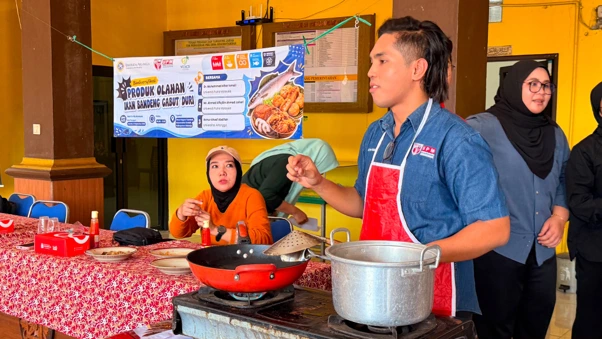
The activity went beyond theoretical presentations. Participants also took part in hands-on processing practices, allowing them to see how deboned milkfish meat could be developed into products with different forms, characteristics, and uses.
This diversification creates opportunities for milkfish processors to expand the range of products based on local commodities. The initiative also supports SDG 2 (Zero Hunger) through the optimization of fisheries-based food resources and SDG 1 (No Poverty) by creating opportunities to increase the economic value of local products.
From Materials to Processing Practice
The activity featured Dr. Muhammad Azfar Ismail, Senior Lecturer at UPM, and Mr. Ahmad Afiq Bin Ahmad Johari, Assistant Science Officer at UPM. Representing FPK UNAIR, the activity involved Annur Ahadi Abdillah, a lecturer at FPK UNAIR.
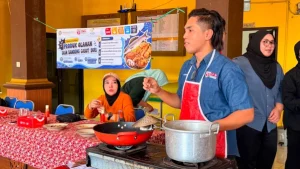
The activity consisted of an opening session, a presentation, and a cooking demonstration. During the practical session, Dr. Azfar directly demonstrated the process of producing processed food products using deboned milkfish meat.
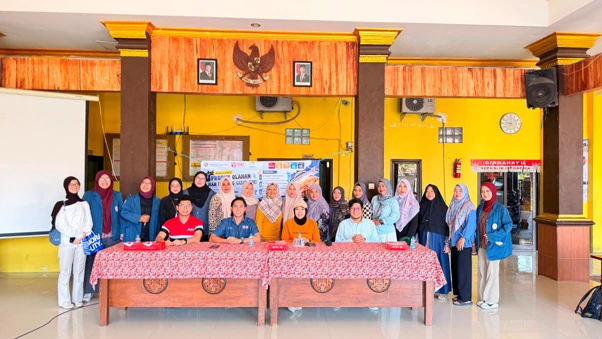
The exchange of knowledge brought together UPM’s experience in fisheries product processing with the potential of milkfish available to the community of Segoro Tambak Village. The Head of Segoro Tambak Village welcomed the activity as an opportunity to introduce more diverse ways of processing milkfish.
“This is a good moment because most of us only process milkfish by removing the bones. This time, it may be different,” he said.
One Fish, More Possibilities
The diversification of milkfish meat demonstrates that a single commodity can offer greater possibilities for utilization. The more diverse the products that can be developed, the greater the opportunities for food innovation based on fisheries products.
This approach aligns with SDG 12 (Responsible Consumption and Production) through increasing the utilization value of commodities. Product development also needs to go hand in hand with awareness of the importance of maintaining the sustainability of fisheries resources, in line with the spirit of SDG 14 (Life Below Water).
The collaboration between FPK UNAIR and UPM also reflects SDG 17 (Partnerships for the Goals). Cross-border knowledge exchange and community involvement demonstrate that fisheries product innovation can grow when universities and communities create collaborative spaces together.
Author: Fahmi Bayhaqi
Editor: TPA