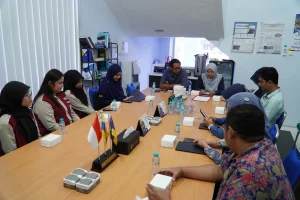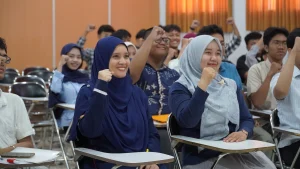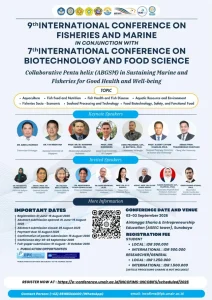
Students from the Faculty of Fisheries and Marine Sciences (FPK) at Universitas Airlangga successfully completed two Aquaculture Study Sessions in March and April 2025. These sessions aimed to deepen students’ understanding of production aspects and technological innovations in aquaculture, preparing them to contribute to sustainable and efficient fish farming.
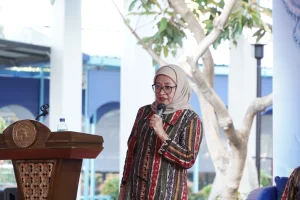
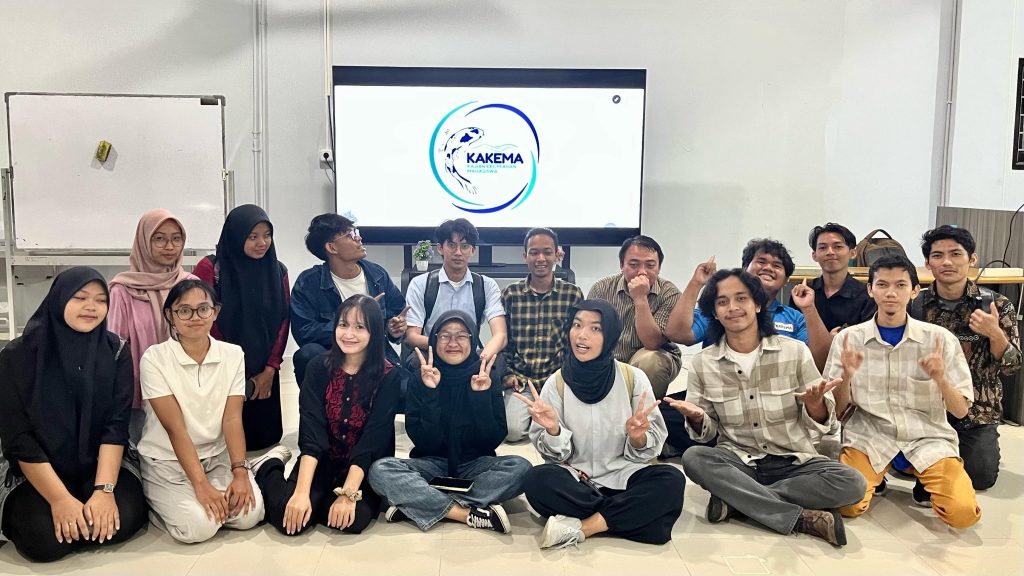
The first session of the Aquaculture Study took place on Saturday, March 22, 2025, and was facilitated by Samara, a 2023 Aquaculture student. The event featured Dr. Muhammad Hanif Azhar, S.Pi., M.Si., Ph.D., a faculty member of FPK and the advisor of KAKEMA student organization, who delivered a lecture on “Production Parameters in Aquaculture.” Dr. Hanif discussed key production indicators including Specific Growth Rate (SGR), Average Daily Growth (ADG), Weight Gain (WG), Biomass Gain (BG), and Survival Rate (SR). Students were introduced to feed management concepts, including Feed Conversion Ratio (FCR), Feed Efficiency (FE), and total feed management (Total Feed, TF). Practical exercises enabled participants to understand production cost calculations, revenue estimation, R/C Ratio, Break Even Point (BEP), and Payback Period (PP), illustrated through a koi fingerling business case study. The session concluded at 3:00 PM WIB with a collective prayer and group documentation.
The second session was held on Thursday, April 18, 2025, beginning at 3:00 PM WIB and also led by Samara. Dr. Hanif returned as the main speaker to present on Integrated Multi-Trophic Aquaculture (IMTA) systems and biofloc technology in aquaculture. The lecture emphasized the fundamental concepts of IMTA, the application of biofloc systems, optimal environmental conditions for biofloc growth, and innovative technological approaches to enhance productivity and sustainability. Students actively engaged in interactive discussions, exploring challenges and opportunities for implementing these technologies in real-world aquaculture settings. The session wrapped up at 5:15 PM WIB with a group prayer and photo documentation.
By completing both sessions, students gained not only technical knowledge of aquaculture production but also motivation to develop modern, innovation-driven aquaculture practices aligned with the principles of the blue economy. The sessions highlighted the importance of production efficiency, waste management, and environmental sustainability. Equipped with these insights, FPK students are expected to contribute meaningfully to environmentally responsible and competitive aquaculture development. The program strengthens students’ readiness to apply advanced technologies such as IMTA and biofloc systems, fostering a new generation of aquaculture professionals committed to sustainable practices and innovation in Indonesia and beyond.