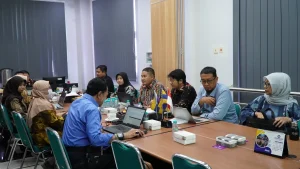
Mukah, Sarawak — Universitas Airlangga, through its Faculty of Fisheries and Marine Sciences (FPK), has initiated a collaborative community research program in Mukah, Sarawak, in partnership with Universiti Teknologi MARA (UiTM) and Universiti Teknologi Sarawak (UTS). The program focuses on developing value-added products derived from locally sourced fisheries by-catch, aiming to unlock the hidden economic potential of underutilized marine resources. This cross-border academic collaboration reflects a shared commitment to sustainable fisheries innovation, community empowerment, and applied research that directly benefits coastal communities.
The initiative centers on transforming low-value by-catch species—particularly pelata fish (Alepes djedaba) and puput fish (Ilisha elongata)—into commercially viable products. Although these species are frequently categorized as non-target catch and often command limited market prices, the research team identified significant untapped potential within their biological composition. The community research program actively involves lecturers, researchers, and students who work directly alongside local fishers and small-scale fisheries entrepreneurs in Mukah. Through field observations, participatory discussions, and laboratory-based analysis, the team seeks to address longstanding challenges related to limited processing capacity and restricted access to post-harvest technology. By bridging academic expertise with local knowledge, the program aligns with FPK Airlangga’s mission to integrate research, education, and community engagement in advancing sustainable fisheries development.
In its implementation, the research emphasizes raw material potential analysis through preliminary characterization of fish parts that have not been optimally utilized—particularly bones and skin. Despite being commonly regarded as by-catch due to their status as non-primary target species, initial findings reveal that both pelata and puput fish contain relatively high protein levels in their bones and skin, especially structural proteins such as collagen. This scientific evidence forms the foundation for developing gelatin as a sustainable and applicable value-added product. Gelatin production from fish-based collagen not only enhances the economic value of by-catch resources but also promotes environmentally responsible utilization by minimizing waste in the fisheries supply chain. Through this applied research approach, Airlangga University and its partners demonstrate how academic collaboration can generate tangible socio-economic impact while contributing to sustainable marine resource management at the regional level.