Faculty of Fisheries and Marine Universitas Airlangga (FPK UNAIR) reaffirmed its commitment to practice-based learning through a field practicum conducted by 28 sixth-semester Aquaculture students specializing in Marine Science and Technology on April 27, 2026. The activity took place in the coastal area of South Malang, particularly at Clungup Beach and Gatra Beach, as part of the implementation of the Marine Resource Conservation, Marine Bioprospecting, and Marine Survey and Mapping courses. Through this program, students were encouraged to directly engage with coastal ecosystems and gain firsthand experience in understanding sustainable marine resource management.
The field practicum was designed as an integrative learning strategy that combined classroom theory with direct field experience. During the activity, students carried out environmental observations, identified marine resource potentials, and practiced basic field data collection techniques under the supervision of lecturers. The program aimed to strengthen students’ academic understanding while simultaneously improving their practical competencies in marine conservation, coastal ecosystem management, and spatial mapping.
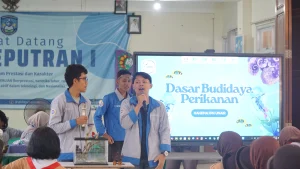
In addition to field observations, the practicum also involved collaboration with conservation practitioners through interactive learning sessions with the Natural Resources Conservation Agency (BBKSDA) of Malang Raya and Sempu Island Resort, as well as the management team of Clungup Mangrove Conservation (CMC) Tigawarna. This collaboration provided students with practical insights into real-world conservation management and highlighted the importance of multi-stakeholder cooperation in protecting coastal ecosystems.
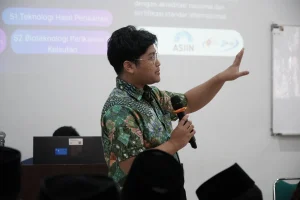
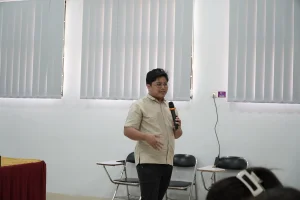
During the session, representatives from BBKSDA explained various strategies for managing conservation areas, particularly within Sempu Island Nature Reserve. The discussion focused on preserving ecosystem authenticity and protecting natural resources from environmental threats. BBKSDA also emphasized the importance of community empowerment in sustainable conservation practices. Educational programs such as workshops and public outreach initiatives were introduced as effective approaches to increasing local community capacity in managing natural resources responsibly while creating economic value.
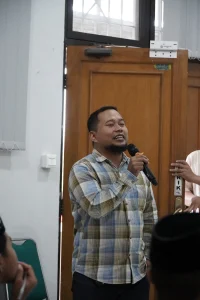
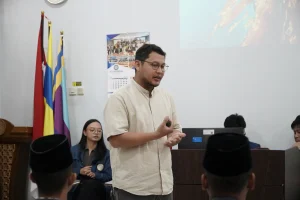
The activity continued with a Forum Group Discussion (FGD) alongside the CMC Tigawarna management team, who shared practical experiences regarding community-based coastal management in Clungup, Gatra, and Tigawarna Beach areas. Students actively participated in the discussion by raising questions about conservation challenges, stakeholder involvement, and sustainable tourism management. This interactive session created a dynamic learning atmosphere that enabled students to connect academic concepts with real conservation practices.
The practicum provided significant benefits for students, including enhanced practical knowledge, critical thinking skills, teamwork, and field analysis abilities. More importantly, direct interaction with coastal ecosystems and conservation practitioners helped students develop a deeper awareness of environmental sustainability and the complexity of marine ecosystem management. Such experiences are expected to shape students into future marine professionals who are adaptive, collaborative, and environmentally responsible.
This activity also aligns with the implementation of the Sustainable Development Goals (SDGs), particularly SDG 4 (Quality Education) through experiential learning approaches, SDG 14 (Life Below Water) through strengthening marine conservation awareness, SDG 15 (Life on Land) through ecosystem protection efforts, and SDG 17 (Partnerships for the Goals) through collaboration among academic institutions, government agencies, and community-based conservation organizations.
Through this field practicum, FPK UNAIR continues to strengthen its role as an institution that promotes contextual, collaborative, and sustainability-oriented education. The program is expected to encourage students to become active contributors in preserving Indonesia’s coastal and marine ecosystems while applying scientific approaches to future environmental challenges.
Writer: FBM
Editor: TPA