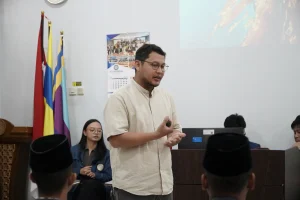
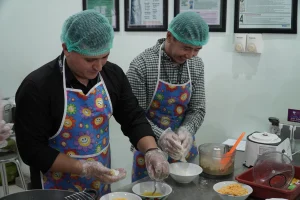
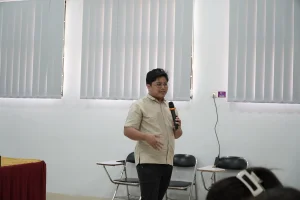
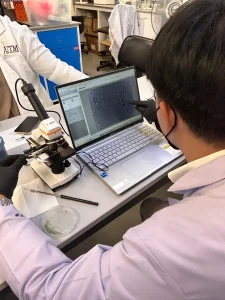
Mojokerto – The ECOFISH 1.0 Team from the Student Scientific Study Group (KAKEMA), Faculty of Fisheries and Marine (FPK), Universitas Airlangga (UNAIR), introduced an innovative biofloc pond to support sustainable tilapia farming at Sumber Gempong Tourism Village, Ketapanrame Village, Trawas District, Mojokerto Regency. Conducted on July 12–14, 2026, the initiative formed part of a community engagement program funded through UNAIR SUSTAINACTION 2026.
Thank you for reading this post, don't forget to subscribe!The project aims to promote sustainable aquaculture by implementing biofloc technology, an environmentally friendly and resource-efficient cultivation system. Beyond improving tilapia production, the newly established biofloc pond is expected to strengthen the educational tourism potential of Sumber Gempong Tourism Village by showcasing modern aquaculture practices to visitors and the local community.
Collaborative Development of a Sustainable Aquaculture Facility
The program began with coordination between the ECOFISH 1.0 Team and the management of Sumber Gempong Tourism Village to determine the most suitable location for the biofloc pond. Once the site was selected, the team prepared the necessary materials and equipment, including assembling the pond frame, installing the pond liner, and setting up supporting infrastructure required for the biofloc system.
The construction process was carried out collaboratively by university students and village representatives. This participatory approach was intended not only to facilitate the long-term management of the facility after the program concluded but also to strengthen local capacity in adopting modern aquaculture technologies.
The Head of the ECOFISH 1.0 Team explained that the construction of the biofloc pond represents an initial step toward introducing more efficient aquaculture practices to the local community.
“We hope this biofloc pond will serve not only as a tilapia farming facility but also as an educational platform that enhances community capacity in implementing sustainable aquaculture technologies,” the team leader said.
Supporting Tilapia Farming and Educational Tourism
Before fish stocking, the biofloc pond will undergo water preparation and biofloc formation according to established aquaculture standards. Biofloc technology was selected because it significantly improves water-use efficiency, optimizes waste management, and maintains water quality through beneficial microorganisms that form bioflocs.
These microbial flocs also function as an additional natural food source for fish, helping reduce feed consumption while improving production efficiency. Through these advantages, the biofloc system is expected to support higher tilapia productivity while minimizing environmental impacts.
The newly established facility is also expected to enrich the educational tourism experience at Sumber Gempong Tourism Village. Visitors will have the opportunity to observe the entire tilapia farming process using biofloc technology, from pond preparation and water quality management to sustainable aquaculture practices that promote environmental conservation.
Strengthening Community Empowerment through Sustainable Innovation
As part of the UNAIR SUSTAINACTION 2026 program, the construction of the biofloc pond reflects Universitas Airlangga’s commitment to empowering local communities through the application of science, technology, and local resource development. The collaboration between the ECOFISH 1.0 Team, the tourism village management, and local residents demonstrates how academic institutions and communities can work together to generate long-term economic, educational, and environmental benefits.
The initiative also supports the Sustainable Development Goals (SDGs), particularly SDG 2 (Zero Hunger) by strengthening food security through sustainable fish farming, SDG 14 (Life Below Water) by promoting environmentally responsible aquaculture practices, and SDG 17 (Partnerships for the Goals) by fostering collaboration between higher education institutions and local communities to unlock regional development potential.
Writer : Sabhrina Putri Khodijah
Editor : Farrel Bhanu Mahardhika