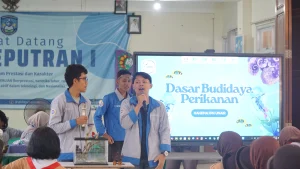
Continuing the PKL 2026 Socialization series discussed in Part 1, the Faculty of Fisheries and Marine Sciences (FPK), Universitas Airlangga (UNAIR), provided an in-depth explanation regarding the implementation of Field Work Practice (PKL) under the Merdeka Belajar–Kampus Merdeka (MBKM) scheme, as well as opportunities for international internships aimed at strengthening students’ global competencies. This session emphasized the faculty’s commitment to aligning internship programs with national higher education policies while simultaneously expanding international exposure for students of the Aquaculture and Fisheries Product Technology undergraduate programs. By integrating MBKM pathways and overseas placements into the PKL framework, FPK UNAIR ensures that internship experiences remain academically rigorous, professionally relevant, and globally competitive.
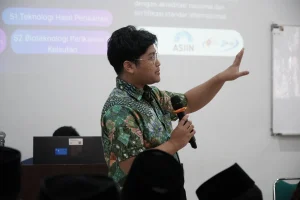
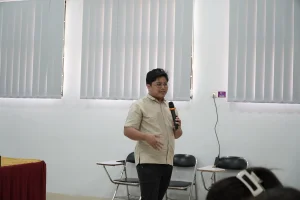
During the session, the MBKM Program Coordinator delivered a comprehensive explanation of the PKL implementation mechanism under the MBKM scheme. The discussion covered supervision systems, administrative procedures, and the course credit conversion process in accordance with prevailing regulations. This clarification was essential to help students understand the distinctions between regular PKL and MBKM-based internships, particularly in terms of study load, reporting requirements, academic recognition, and assessment standards. Students were guided through the procedural flow to ensure they can make informed decisions when selecting internship schemes aligned with their academic progression and career aspirations. By detailing regulatory compliance and academic integration, FPK UNAIR reinforced the importance of structured preparation to ensure that MBKM internships not only fulfill credit requirements but also provide meaningful experiential learning outcomes.
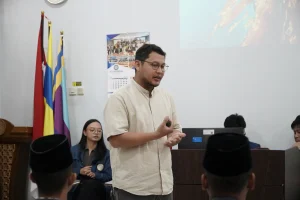
A significant highlight of the socialization was the mapping of international internship destinations. The faculty introduced opportunities for students to gain overseas experience through partnerships with institutions and industry collaborators in various countries. These international placements are designed to enhance graduates’ competitiveness and broaden their global perspectives in aquaculture and fisheries product technology. Exposure to international industry standards, research environments, and cross-cultural professional settings enables students to strengthen both technical expertise and adaptive soft skills. Furthermore, international engagement supports SDG 17 (Partnerships for the Goals) by fostering strategic academic and industry collaborations across borders. Student involvement in global industry practices also contributes to knowledge transfer and innovation in sustainable marine resource management, directly aligning with SDG 14 (Life Below Water) and SDG 13 (Climate Action) through the promotion of climate-adaptive aquaculture and responsible fisheries production systems. This international dimension reflects FPK UNAIR’s broader institutional strategy to integrate sustainability, innovation, and global engagement within its academic programs.
Through this extended PKL 2026 Socialization, students gained a comprehensive understanding of internships as platforms for professional competency development, soft skills enhancement, and workforce readiness. The structured and transparent guidance enables students to strategically plan their PKL experiences according to their academic interests, specialization fields, and long-term career goals. Institutionally, this initiative strengthens FPK UNAIR’s reputation as a faculty that is responsive to national higher education reforms and committed to internationalization. By ensuring that the Class of 2023 students are prepared to undertake internships in a professional, competitive, and sustainability-oriented manner, FPK UNAIR reaffirms its dedication to producing graduates capable of contributing meaningfully to the sustainable development of Indonesia’s fisheries and marine sector.x