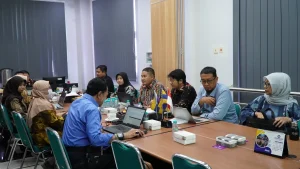
Faculty of Fisheries and Marine Sciences, Universitas Airlangga (FPK UNAIR), continues to strengthen its international academic engagement through a collaborative guest lecture program with Universiti Malaysia Terengganu (UMT). On 8 July 2026, Terry Previo Avianto, S.Pi., M.Si., a lecturer from the Fisheries Product Technology Study Program at FPK UNAIR, served as a guest speaker in the course Introduction to Food Chemistry attended by Bachelor of Food Science students at UMT via an online learning platform. The activity was designed to broaden students’ global perspective on food safety issues, particularly those related to fisheries product processing industries in Southeast Asia.
The guest lecture, held as part of an international academic exchange initiative, featured a comprehensive presentation entitled “Common Toxins and Contaminants Found in Indonesian Fisheries Processing Industry.” In this session, Terry Previo Avianto introduced the institutional profile of Universitas Airlangga and highlighted Indonesia’s strategic position as one of the world’s largest archipelagic nations with vast marine resources. He emphasized that fisheries production plays a critical role in national food security, as a significant portion of fish consumption in Indonesia is supplied by local fishermen who operate across diverse coastal and marine ecosystems. This context underscores the importance of ensuring food safety standards throughout the fisheries supply chain, from harvesting to final distribution.
The lecture further explored major chemical contamination issues in fisheries products, particularly heavy metal contamination. The speaker explained that heavy metals such as mercury (Hg), lead (Pb), cadmium (Cd), and arsenic (As) can enter aquatic environments through industrial discharge, urban runoff, and natural geological processes. Once present in marine ecosystems, these toxic substances may accumulate in fish tissues through bioaccumulation and biomagnification processes. Long-term consumption of contaminated fish products poses serious health risks to humans, including neurological disorders, kidney damage, and other chronic diseases. This topic attracted strong attention from UMT students due to its relevance to global seafood safety challenges and environmental pollution trends.
In addition to heavy metals, the session also addressed the growing global concern regarding microplastic contamination in marine environments. Microplastics, which originate from the breakdown of larger plastic waste and industrial products, are increasingly found in oceans and coastal waters worldwide. These particles can be ingested by aquatic organisms and subsequently enter the food chain, potentially affecting marine biodiversity and human health. The lecturer explained that microplastics may act as carriers for harmful pathogens and chemical pollutants, further amplifying their environmental and biological impact. The discussion highlighted the urgency of sustainable waste management practices and international cooperation in addressing marine plastic pollution.
Another important topic discussed during the lecture was histamine formation in scombroid fish species such as tuna, mackerel, and skipjack. The speaker emphasized that histamine production typically occurs due to improper post-harvest handling and inadequate cold chain management during storage and distribution. When fish are exposed to unsuitable temperatures, bacterial activity increases, leading to the conversion of histidine into histamine, which can cause food poisoning if consumed in high concentrations. This section of the lecture reinforced the importance of proper handling practices, temperature control, and hygiene standards in maintaining seafood quality and safety.
The session also covered biological contaminants commonly associated with fisheries products, including pathogenic bacteria such as Escherichia coli, Vibrio parahaemolyticus, Salmonella species, and Staphylococcus aureus. In addition, the presence of molds such as Aspergillus flavus was discussed due to its potential to produce aflatoxins in traditionally processed dried fish products. These biological hazards represent significant risks in fisheries processing industries, particularly in regions with varying levels of sanitation and processing infrastructure. The lecture provided students with a holistic understanding of food safety hazards that must be controlled through proper processing techniques and regulatory compliance.
In closing, the speaker outlined Indonesia’s ongoing efforts to improve fisheries product safety and quality assurance systems. These efforts include strengthening traceability systems, implementing Indonesian National Standards (SNI), enhancing laboratory testing capacity, and tightening certification processes for seafood safety assurance. Such initiatives are essential for improving the competitiveness of Indonesian fisheries products in global markets while ensuring consumer protection. The discussion also highlighted the importance of continuous innovation and collaboration between academic institutions, government agencies, and industry stakeholders.
This guest lecture represents a concrete manifestation of academic collaboration between FPK UNAIR and Universiti Malaysia Terengganu in strengthening international cooperation in fisheries and food science education. Beyond expanding students’ academic knowledge, the program serves as a platform for knowledge exchange between researchers and lecturers from both institutions. In alignment with Sustainable Development Goals (SDGs) 17: Partnerships for the Goals, this initiative underscores the critical role of global partnerships in advancing education, research, and innovation to address future challenges in fisheries, marine science, and food security.