Students of the Fisheries Product Technology Study Program, Faculty of Fisheries and Marine Sciences, Universitas Airlangga (FPK Unair), conducted an international collaborative research initiative in partnership with Universiti Teknologi MARA (UiTM) Sarawak Branch, Malaysia. The program highlights a shared commitment to advancing sustainable fisheries utilization and developing value-added products from underutilized marine resources.
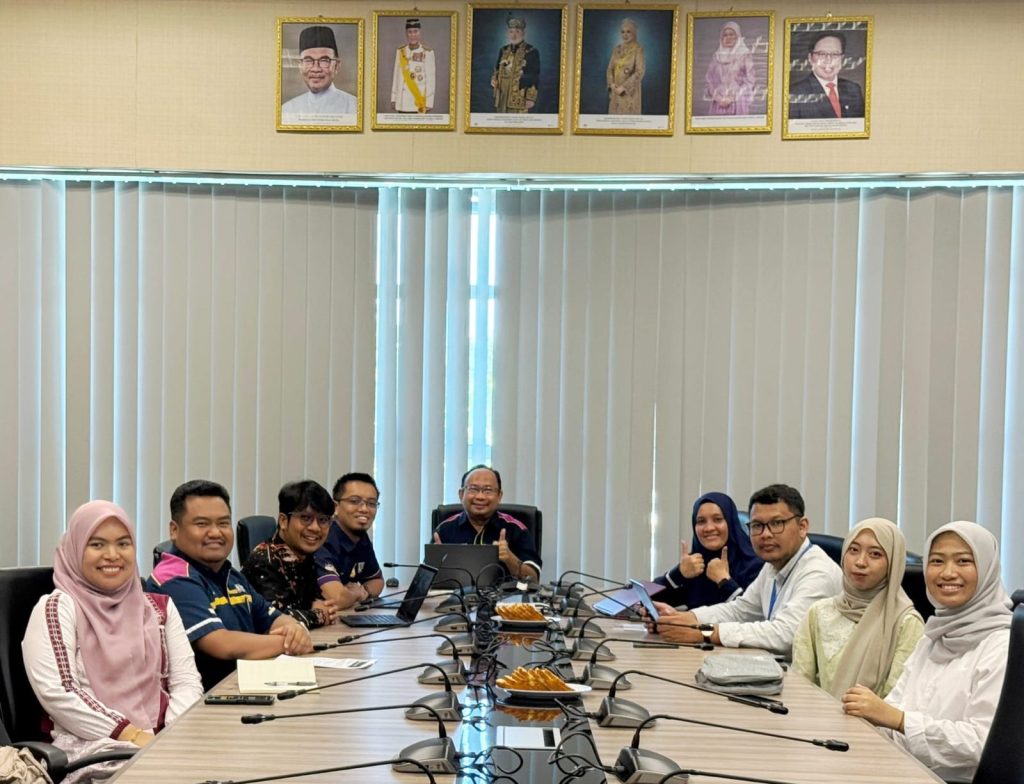
Student delegates Andini Carolina and Fidela Rachmadiani from the Fisheries Product Technology Study Program of the Faculty of Fisheries and Marine Sciences, Universitas Airlangga (FPK Unair), collaborated with the Research Team of the Faculty of Plantation and Agrotechnology (FPA), Universiti Teknologi MARA (UiTM). The collaboration involved Dr. Sharifah Raina Binti Manaf, Head of the Centre of Studies at the Centre of Studies for Science, Plantation and Agrotechnology (KPP PPSPA), alongside lecturers Arif Azizi Bin Che Harun and Nurainni Mohd Arshad. The collaborative research was conducted at UiTM Mukah Campus, Sarawak, Malaysia, as part of an international academic partnership aimed at strengthening research networks and promoting sustainable fisheries development. This initiative serves as a strategic platform for international research collaboration focusing on exploring the potential of local fisheries resources in Mukah, particularly fish species commonly categorized as by-catch but possessing significant opportunities for value-added development.
The primary focus of the research centered on two local fish species: puput fish (Ilisha elongata) and pelata fish (Alepes djedaba). Puput fish is a small pelagic species widely found in the coastal and estuarine waters of Mukah. It is characterized by its soft flesh and considerable protein and mineral content, making it highly promising as a raw material for processed food products and protein hydrolysates. Meanwhile, pelata fish is recognized for its bone and skin structure rich in collagen, presenting strong potential for development into gelatin, biomaterials, and high-value non-food derivative products. Through scientific characterization of raw materials, functional property analysis, and processing innovation, the research team seeks to optimize the utilization of these species to increase their economic value and reduce post-harvest losses.
Historically, both species have been regarded as by-catch because they are not primary fishing targets, have relatively low market prices, and are affected by seasonal catch fluctuations. Limited post-harvest technology and minimal product diversification innovation have resulted in puput and pelata fish being predominantly marketed in fresh form at low prices, with some portions potentially discarded. Addressing this challenge, the collaborative research adopts a science-based approach to transform this paradigm by identifying functional compounds, assessing processing feasibility, and designing product downstream strategies tailored to local resource potential. The research activities included cross-country academic discussions, field observations, sample collection and laboratory analysis, as well as formulation of product commercialization strategies based on Mukah’s local fisheries resources. This collaboration not only strengthens the international research partnership between FPK Unair and FPA UiTM but also represents a strategic effort to promote efficient and sustainable fisheries resource utilization. Ultimately, the initiative aims to support the development of innovative value-added products that contribute to enhancing the economic resilience and welfare of coastal communities.