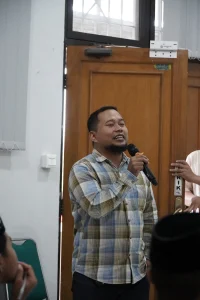
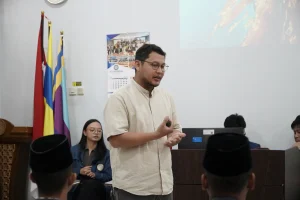
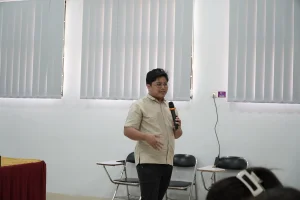
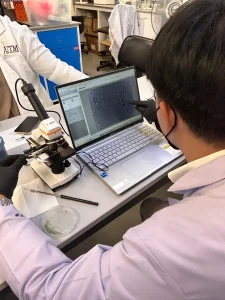
The Faculty of Pharmacy at Universitas Airlangga conducted an intensive training program on the use of Inductively Coupled Plasma–Mass Spectrometry (ICP-MS) from January 27–29, 2026, at the Faculty of Pharmacy, Universitas Airlangga. The program was organized to strengthen the competencies of academic staff and laboratory personnel in mastering advanced analytical instrumentation known for its ultra-high sensitivity. The initiative reflects Universitas Airlangga’s continuous commitment to advancing research quality and laboratory standards in line with international scientific developments.
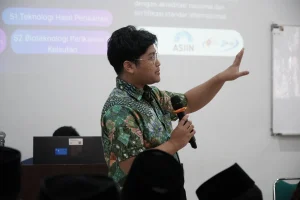
Thank you for reading this post, don't forget to subscribe!The three-day training was attended by representatives from the Faculty of Fisheries and Marine Sciences (FPK) Universitas Airlangga, namely Nina Nurmalia Dewi (lecturer), Fenti Dwi Losanti (laboratory staff), and M. Qushai Yunifiar M. (laboratory staff). All participants actively engaged in technical presentations, discussions, and practical sessions designed to deepen their understanding of ICP-MS operation and application. The program featured two distinguished speakers. The first speaker, Prof. Dr. rer. nat. Mochamad Yuwono, Apt., M.S., from the Faculty of Pharmacy, Universitas Airlangga, elaborated on the strategic role of ICP-MS in supporting education, scientific research, and laboratory testing services. He emphasized its critical function in the analysis of heavy metals and trace elements that require high levels of accuracy and precision. Prof. Yuwono highlighted the importance of understanding the fundamental working principles of the instrument and implementing rigorous quality control procedures to ensure scientifically accountable data.
The second speaker, M. Hendy Fathur R., S.Si., from PT. Wiralab Analitika Solusindo, delivered a technical session focusing on ICP-MS instrument characteristics, its exceptional sensitivity reaching parts per billion (ppb) to parts per trillion (ppt) levels, and analytical challenges associated with various sample matrices. The session addressed practical aspects, including sample preparation techniques, potential interferences during analysis, and the selection of appropriate analytical modes to achieve optimal results. In particular, the training linked ICP-MS applications to the examination of heavy metals in fish and salt samples, such as lead (Pb), cadmium (Cd), arsenic (As), and mercury (Hg). Heavy metal analysis in fish is crucial to ensuring food safety due to the risk of bioaccumulation, while in salt samples, ICP-MS plays a vital role in detecting trace metal contaminants even within high NaCl matrices. Through participation in this program, the Faculty of Fisheries and Marine Sciences Universitas Airlangga aims to optimize ICP-MS utilization to enhance research quality, academic learning processes, and laboratory services, further strengthening its commitment to developing modern, competitive, and internationally recognized laboratory standards.