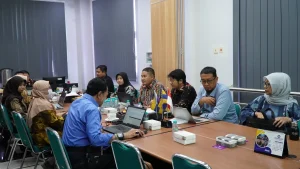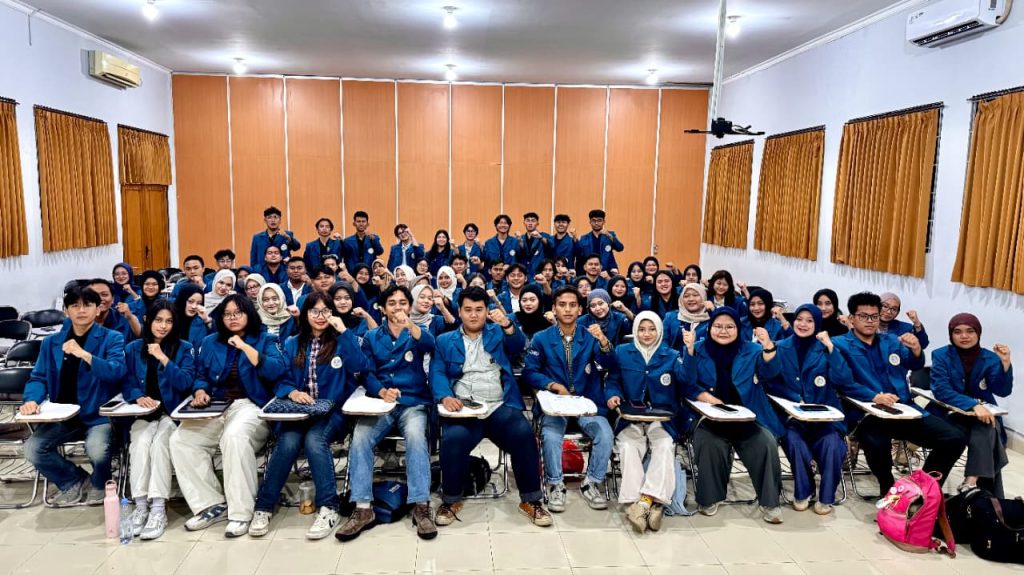
Continuing the discussion from Part 1, the 2026 Work Meeting of BEM FPK UNAIR under the Nalendra Cabinet served as a strategic forum for reaffirming the organization’s leadership direction and concrete action plans. Held as part of the annual organizational consolidation process, the meeting became a pivotal moment for the President of BEM FPK UNAIR 2026, Dimas Ananda Prasetyo, and Vice President Ahmad Fadhil Damarmanah to articulate their vision of impactful student governance. Both leaders emphasized that student executive initiatives must go beyond internal activities and generate tangible contributions to society, particularly in addressing maritime and coastal environmental challenges. Their shared commitment reflects the identity of the Faculty of Fisheries and Marine Sciences, Universitas Airlangga (FPK UNAIR), as an academic institution deeply rooted in marine and fisheries development.
During the forum, the President and Vice President underscored that all formulated work programs must respond to current societal challenges. Indonesia, as a maritime nation, faces complex issues ranging from coastal degradation and climate change impacts to socioeconomic vulnerabilities within fishing communities. In response, the Nalendra Cabinet positioned coastal environmental education, marine conservation campaigns, and local community empowerment as central pillars of its action agenda. Discussions were directed toward developing solution-based programs that integrate scientific insight, student engagement, and community collaboration. By aligning student initiatives with real-world maritime concerns, BEM FPK UNAIR aims to introduce and strengthen the faculty’s identity as a socially responsive and environmentally conscious institution. The strategic direction outlined in this work meeting demonstrates how student organizations can function as catalysts for awareness, advocacy, and sustainable action within the marine and fisheries sector.
The formulated action plans extend beyond internal student development and encourage active collaboration with coastal communities, senior high schools, and external partners. This multi-stakeholder approach aligns with SDG 17 (Partnerships for the Goals), highlighting the importance of cross-sector partnerships in achieving sustainable development. Planned coastal environmental education programs aim to enhance public awareness of climate change mitigation and marine resource conservation, directly supporting SDG 13 (Climate Action) and SDG 14 (Life Below Water). Meanwhile, empowerment initiatives targeting local fishing communities through training and mentoring programs are designed to strengthen community-based fisheries management and improve economic resilience. These efforts contribute to SDG 1 (No Poverty) by supporting livelihood sustainability and SDG 2 (Zero Hunger) by promoting fisheries-based food security. Through these interconnected strategies, BEM FPK UNAIR integrates academic perspectives, research relevance, and community service into its organizational agenda, ensuring that student leadership contributes meaningfully to national development priorities.
Through this Work Meeting, all BEM functionaries gained clear guidance regarding the roles and responsibilities of each ministry within the cabinet structure. Systematic planning and measurable targets were established to ensure that programs are implemented effectively, sustainably, and with broad impact. Institutionally, the event strengthens FPK UNAIR’s image as a faculty that excels not only in academic and research achievements but also in community engagement and maritime advocacy. The Nalendra Cabinet 2026 embodies a collaborative and innovative spirit, demonstrating optimism in delivering concrete contributions for students, coastal communities, and Indonesia’s maritime sector. By integrating leadership vision, strategic partnerships, and sustainability-oriented action, BEM FPK UNAIR 2026 reinforces its commitment to advancing marine conservation, community empowerment, and responsible maritime development for the long term.
BEM FPK UNAIR 2026 outlines a strategic maritime action agenda focusing on coastal education, conservation, and community empowerment aligned with global SDGs.