The Faculty of Fisheries and Marine Sciences at Universitas Airlangga (FPK UNAIR) continues to strengthen practice-based learning through a pond revitalization program held in the faculty’s front yard on Thursday (June 18, 2026). The activity formed part of the faculty’s effort to improve aquaculture facilities while also serving as a field-based learning platform for students of the Aquaculture Study Program. The revitalization was guided by Muhammad Syarif Satriyo Samudra, S.Pi., an Aquaculture alumnus from the 2021 cohort, together with Daruti Dinda Nindarwi, S.Pi., M.P., a lecturer from the Department of Aquaculture. A total of 30 students from the 2023, 2024, and 2025 cohorts took part directly in the program. Also present were the Dean of FPK UNAIR, Prof. Dr. Endang Dewi Masithah, Ir., M.P., and Vice Dean II, Kustiawan Tri Pursetyo, S.Pi., M.Vet., Ph.D., who joined the site visit and observed the revitalization process firsthand.
The pond revitalization was carried out as part of the faculty’s initiative to restore and optimize aquaculture facilities so that they can be used more effectively in student learning. Within the faculty environment, the ponds function not only as practical training facilities but also as an applied learning space that bridges classroom theories with real field experience. Through this activity, students were introduced directly to the technical stages of pond management, beginning with the preparation of aquaculture ponds before fish or other aquatic commodities are stocked. By taking part in the process from the initial stage, students were able to gain a clearer understanding of how pond conditions, infrastructure, and environmental readiness affect the success of aquaculture production systems.
According to Daruti Dinda Nindarwi, the program deliberately involved students from different year groups so they could experience fieldwork directly while also supporting academic regeneration within the department. She emphasized that aquaculture education cannot rely solely on classroom instruction, but must also be supported by practical exposure in the field so that students understand the real conditions they will encounter in the aquaculture sector. For Aquaculture students, participation in the revitalization became a valuable opportunity to observe how culture facilities are prepared before use. Activities such as this help students understand pond fundamentals, water channel management, and technical procedures that must be considered to ensure a successful cultivation process. The revitalization therefore served not only as facility maintenance, but also as an experiential learning process that connected theory, practice, and professional preparation.
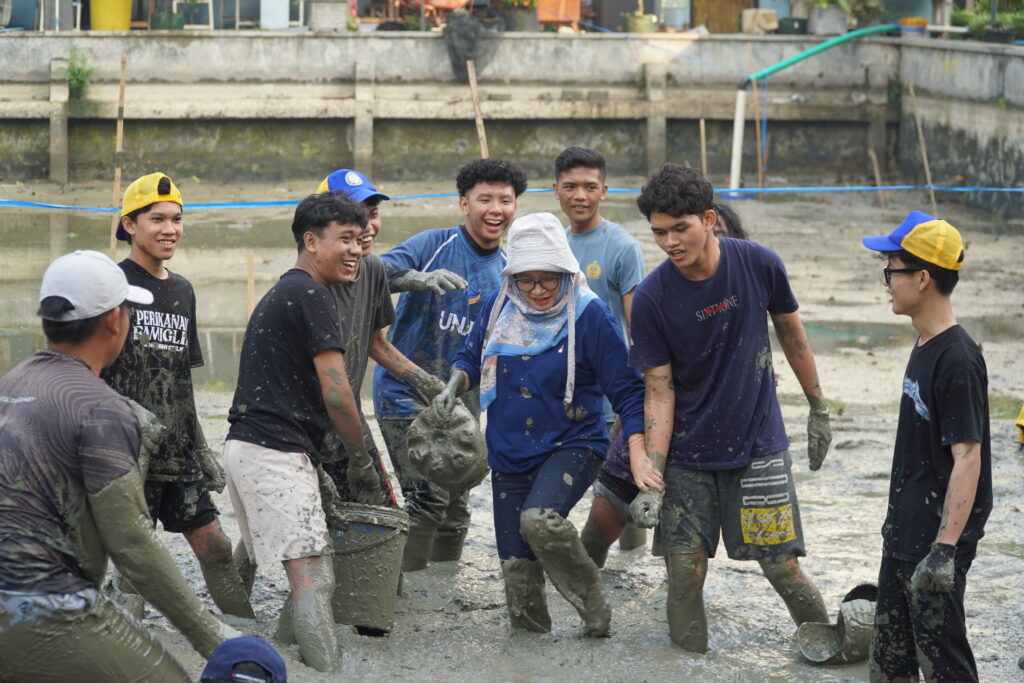
During the implementation, students began the program by removing accumulated soil and mud from the pond area. This process was carried out at several points where sediment buildup had occurred and had the potential to disrupt pond bottom conditions. Muhammad Syarif Satriyo Samudra explained that sludge removal was an important first step in the revitalization process because it was directly related to land readiness for the next cultivation cycle. He noted that the first agenda of the activity was to remove soil from the pond, especially in sections where sediment had piled up, with a target of approximately 300 sacks. After the sludge removal stage, the program continued with improvements to the pond’s drainage channels to ensure proper water circulation. This step was essential to support water quality management throughout future cultivation activities. In addition to repairing the drainage flow, excess soil in the middle section of the pond was also removed so that the pond bottom would become more even and suitable for reuse. The next stage of the revitalization will continue with liming as part of the pond-bottom preparation before water is reintroduced.
The revitalization program also highlighted the synergy between academic learning and industrial practice. The presence of Muhammad Syarif Satriyo Samudra as both an alumnus and an aquaculture practitioner offered students a practical perspective on how aquaculture knowledge is applied in business and professional settings. Satriyo is currently active as a young director of PT Rejeki Bintang Samudra, a company engaged in the cultivation of Gracilaria verrucosa and milkfish through a blue economy approach. At the same time, Daruti Dinda Nindarwi contributed an academic perspective enriched by her experience as a lecturer, researcher, and entrepreneur in aquaculture. The collaboration between lecturers, alumni, students, and faculty leaders reflected FPK UNAIR’s commitment to providing contextual and relevant learning experiences aligned with field demands. Through this pond revitalization, FPK UNAIR not only improved its aquaculture facilities, but also strengthened student learning through direct practical engagement. The program aligns with the faculty’s commitment to supporting the Sustainable Development Goals (SDGs), particularly SDG 4 on Quality Education through practice-based learning and SDG 17 on Partnerships for the Goals through collaboration among students, lecturers, alumni, and faculty leaders. In the future, the revitalized ponds are expected to support more applied aquaculture learning while preparing students to face the challenges of the fisheries and aquaculture sector more effectively.